
Single-Zone vs Multi-Zone Ductless AC: Which Setup Fits Your Home?
July 27, 2026 | Category: Air Conditioner, Ductless

Start by counting rooms, not equipment. One room that is genuinely uncomfortable is a single-zone question. Three or four uncomfortable rooms is either a multi-zone question or three or four separate single-zone questions, and what usually settles that is not an efficiency rating. It is whether your property has physical room for more than one outdoor unit. That is the part most single-zone vs multi-zone ductless AC comparisons bury under a spec table, and it is the part that decides the job on a narrow Toronto lot. A ductless air conditioner can be arranged either way, so the arrangement is yours to get right. What follows is a decision order you can work through with a quote in your hand, not a spec comparison.
Single-Zone and Multi-Zone: The Difference in One Minute
Both setups use the same technology in a different arrangement. Refrigerant lines carry heat between an outdoor compressor and one or more indoor heads, and no ductwork is involved either way. So the whole single-zone vs multi-zone ductless AC decision comes down to one question: how many rooms is one outdoor compressor being asked to serve, and what do you give up by sharing it.
What a Single-Zone System Is
Natural Resources Canada defines a mini-split as a single indoor unit inside the home served by a single outdoor unit, with the indoor coil sitting on the floor or wall of the room it conditions. That is the whole system. One outdoor unit, one head, one line set, one circuit, one hole in the wall. Because the indoor coil sits in the room rather than upstream in a duct trunk, the air is treated where you feel it. A single-zone system is the cleanest answer to a single-room problem, and it stays independent of everything else in the house.
What Changes When You Add Heads
A multi-split, in the same federal definition, is multiple indoor units in the home served by a single outdoor unit. Here is the catch the definitions leave out: only the outdoor unit is shared. Every head you add brings its own line set, its own condensate path, its own wall penetration, and its own controller. That per-head multiplication, not the box outside, is where multi-zone labour and cost actually live. So the common assumption that multi-zone must be cheaper because it is one system does not survive contact with the install.
Start With the Rooms, Not the Equipment

Head count is an output of the house, not a number you pick off a menu. Three questions decide it, and they run in this order: which rooms genuinely have a problem, whether those rooms behave differently from each other, and whether the smallest available head is still too big for them. Answer those and the configuration mostly answers itself.
Count the Rooms That Genuinely Have a Problem
Ductless earns its keep where ducts do not reach or do not deliver. The usual suspects are a bonus room over the garage, a finished basement, an addition, a converted attic, and a west-facing primary bedroom that cooks by 4pm. Rooms that are already comfortable do not need a head. The most common way a ductless quote inflates is a head in a room nobody ever complained about. Walk the house on a hot afternoon and write down only the rooms that fail. That list, and nothing longer, is your starting head count.
Ask Whether Those Rooms Behave the Same Way
Zoning is only worth paying for when the zones actually differ. Multi-zone earns its cost when rooms carry genuinely different loads and schedules: a home office occupied all day beside a guest room used twice a year, or a south-facing room that gains sun against a north-facing one that never does. If your three problem rooms all face the same way, hold the same setpoint, and are used at the same hours, you are buying control you will never touch. A house where one room needs cooling at 2pm and another needs nothing until evening uses every bit of the zoning it paid for.
Watch the Small Rooms
There is a floor on how small an indoor head gets. for example the US Department of Energy building science guidance notes that the 120V ductless units on the market run from 6,000 to 12,000 BTU/h, and even the low end of that is more than a small bedroom typically needs. So the smallest head a manufacturer makes is often still larger than the room you want to put it in. This is the single most common sizing trap in ductless, and it applies to single-zone and multi-zone equally. What an oversized head does to comfort is covered further down, and it is worse than most homeowners expect.
Where the Outdoor Unit Can Go Often Decides This
Here is the honest answer that most comparison articles bury below the efficiency tables. On a lot of GTA properties, the configuration is settled by exterior space before anyone opens a spec sheet. Efficiency ratings are a tiebreaker. Available wall and yard is the constraint.
Narrow Lots, Semis, and Townhouses
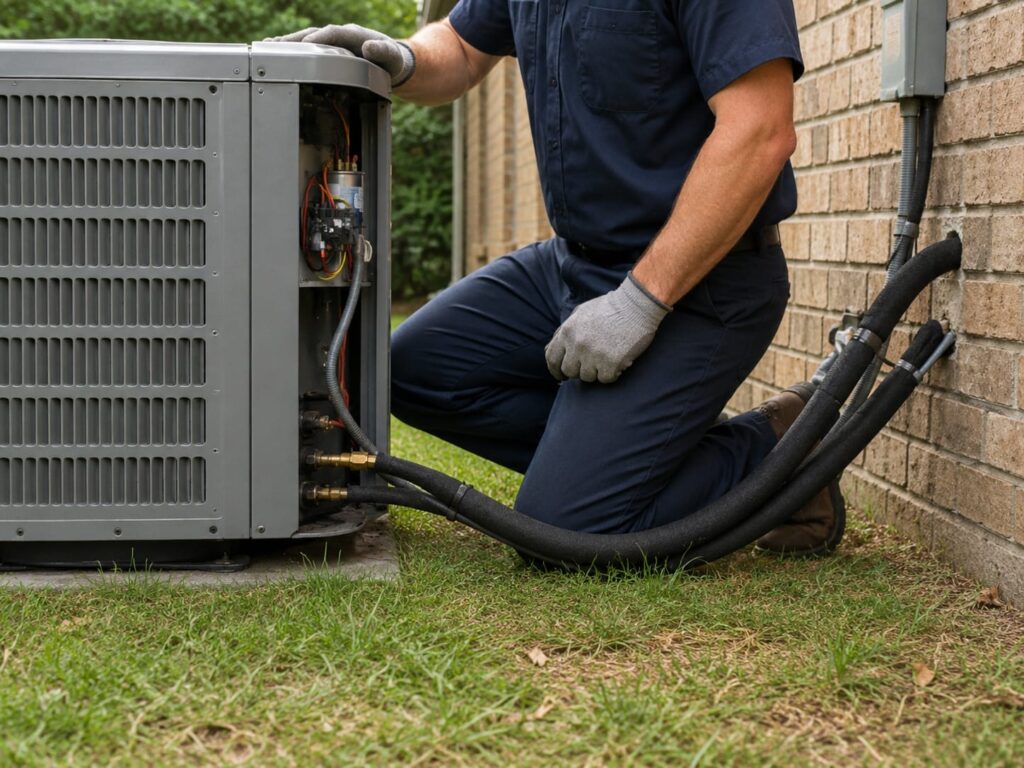
Four single-zone systems means four outdoor units, four brackets or pads, four sets of lines running down the exterior wall, and four disconnects. On a Toronto semi or a townhouse with a four-foot side yard, that is not a preference question. There may physically be room for one outdoor unit and clearance for one, and that fact decides the configuration before efficiency is even discussed. Service clearance, snow clearance, and the walkway to the back gate all have to survive the install. Getting outdoor unit placement settled early is what keeps a four-head plan from collapsing on site.
Condo Rules, Heritage Districts, and What the Neighbours See
Rules can be as binding as clearances. Condo corporations often restrict what gets mounted on an exterior wall or a balcony, and how many units are allowed. Heritage district guidelines can limit what appears on a street-facing elevation. Aesthetics count too: some owners will accept one outdoor unit on the side of the house and will not accept four. Find out what your corporation or your district permits before you price the configuration, because a plan that is not permitted is not a plan.
How Many Heads Can One Outdoor Unit Handle
There is a number the equipment allows, and a smaller number the building scientists recommend. The gap between the two is where regret lives. Homeowners tend to be quoted near the equipment maximum, so it is worth knowing both numbers before you sign anything.
The Equipment Maximum Is Not the Recommendation
US building science guidance is blunt about it: connecting more than three indoor units to one outdoor unit is generally not recommended, even though some models allow as many as eight. Current multi-zone outdoor units in the residential class typically connect up to five indoor heads, with outdoor capacity in the range of 1.5 to 4 tons. So a five-head quote is not outside what the equipment permits. It is outside what the guidance suggests you plan around. If your list of problem rooms runs past three, that is the moment to ask whether every room on it truly failed the afternoon test.
Why the Outdoor Unit Is Not the Sum of the Heads
The outdoor unit on a multi-zone system is not simply the sum of the heads attached to it. Rooms rarely hit peak demand at the same moment, so the outdoor unit is matched to what the home actually draws at once rather than to a total on paper. Every manufacturer publishes match-up tables setting which heads combine on which outdoor unit, and those tables, not arithmetic, decide the pairing. This matters for one practical reason: you cannot check a multi-zone proposal by adding the head capacities and comparing. Ask your installer which match-up table the proposed combination comes from.
Everything above compresses into six factors. Read the last column first, because that is where your own house shows up.
Single-Zone vs Multi-Zone Ductless AC at a Glance
| Factor | Single-Zone | Multi-Zone | What Decides It |
| Rooms served | One | Two to five on common residential equipment; some models allow more | How many rooms genuinely have a comfort problem |
| Outdoor units | One per room served | One, shared | Available exterior space and condo or heritage restrictions |
| Heating and cooling at the same time | Not applicable, each system is independent | One mode at a time on standard equipment | Whether rooms on the system need opposite modes in spring and fall |
| Top published efficiency | Highest ratings on the market sit with single-zone equipment | Top multi-zone ratings sit below top single-zone ratings, and above mid-tier single-zone | Compare the two specific systems quoted, not the categories |
| If the outdoor unit fails | That room only | Every room on the system | How much of the house you are willing to put on one point of failure |
| Where cost scales | Per complete system added | Per head added: line set, condensate, wall penetration | Head count and how far the line sets have to run |
The Trade-Offs You Only Notice After Installation
The differences that follow do not show up on a quote. They show up in April, or on the night a compressor stops, or the third time you clean a filter in a room nobody uses. That is exactly why they belong in a buying decision rather than an owner’s manual.
One Mode at a Time on Standard Systems
One outdoor unit runs in one mode at a time. You can set a different temperature in every room, but you cannot heat the basement while you cool the bedroom on a standard multi-zone system. Building science guidance states that all indoor units must be set to the same mode, and that failing to do so causes extreme decreases in efficiency. Equipment that genuinely does both at once exists, and it costs considerably more. In spring and fall, when the north side of the house wants heat and the south side wants cooling, this is the limitation you will actually notice.
Turning Off a Head Does Not Reliably Save Money
Most homeowners assume an unused head switched off is a head that costs nothing. That is not what the evidence shows. Energy savings from switching off individual indoor units on a multi-zone system range from modest to negative, meaning the system can use more energy rather than less. The outdoor compressor still has to serve the remaining heads, and it ends up operating further from its efficient range while doing so. So plan the head count as though every head will run, because from the compressor’s point of view it may as well be.
One Outdoor Unit Is One Point of Failure
One outdoor unit serving five rooms is one failure point serving five rooms. Independent single-zone systems fail independently, so a compressor problem takes out one room and leaves the rest alone. This almost never comes up at the quote stage, and it deserves a moment of thought. If one of those rooms is a bedroom in a heat wave, or a home office you work from daily, consolidating everything onto one outdoor unit is a real trade. Decide it deliberately rather than by default.
Noise, Inside and Outside
There are two separate noise questions here and homeowners usually have both. Inside, a head mounted in a bedroom runs at low fan speed most of the night, which is unobtrusive when the head is the right size. An oversized head is the noisy one, because it ramps up, satisfies the room fast, shuts off, and starts again. Outside, the configuration decides where the noise sits. One multi-zone outdoor unit is one noise source. Four single-zone units are four, and on a four-foot side yard they sit close to a neighbour’s window as well as your own.
Indoor Maintenance Multiplies With Head Count
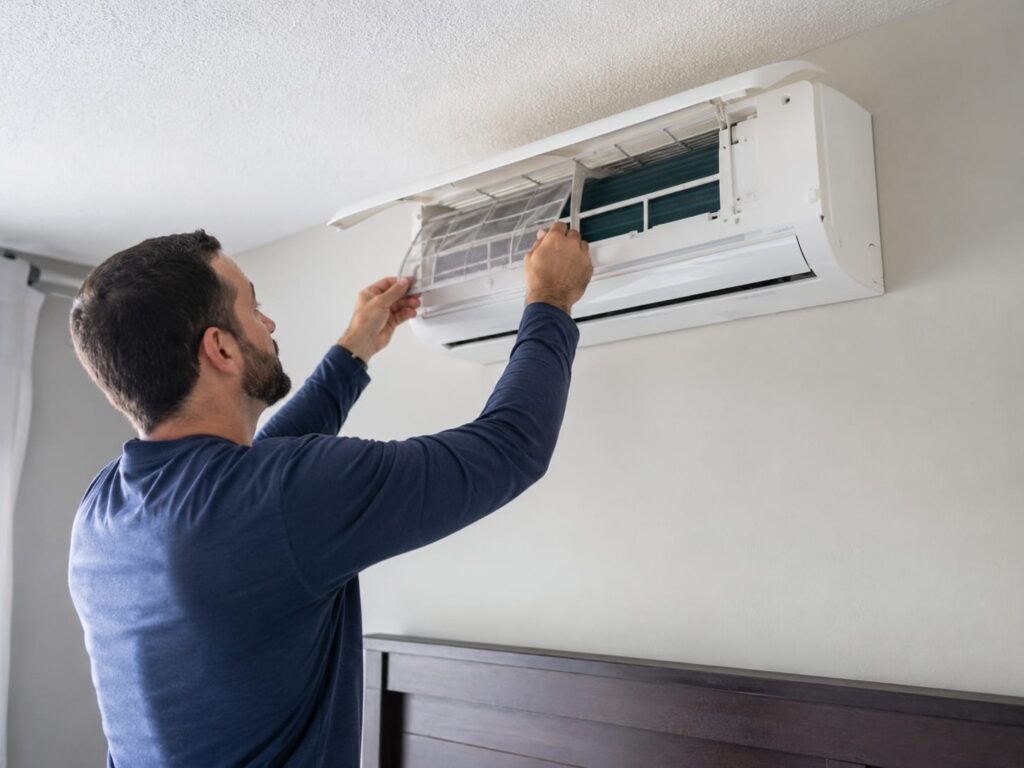
Ongoing maintenance is a genuine single-versus-multi difference that quotes rarely mention. Five heads means five filters to clean on a schedule, five condensate paths that can clog, and five indoor coils to service. The shared outdoor unit does not multiply, so that half of the work stays roughly constant. The indoor half does not. Head count sets that ownership cost permanently on the day of the install, which brings us back to the room list: a head in a room that never had a complaint is a filter you will be cleaning for 15 years.
Efficiency: What the Ratings Actually Show
Efficiency is where this comparison gets oversimplified in both directions. One camp says single-zone is always more efficient. The other says the difference is a sales line. The honest answer needs one distinction, and it is the distinction between comparing categories and comparing the two systems actually in front of you.
The Baseline Worth Comparing Against
Start with the floor. ENERGY STAR requires split-system heat pumps to meet 7.8 HSPF2, 15.2 SEER2 and 11.0 EER2. Read that as the entry point for an efficient unit, not a target to aim at, because plenty of equipment sits well above it. What you should be asking is how far above the floor a given quote sits, and whether the extra rating earns its price in your climate and your hours of use. Working out what SEER2 rating makes sense for a Toronto home is a better use of your time than chasing the highest number on the market.
Best Against Best, Not Category Against Category
Compare the spec sheets and a pattern shows up. The most efficient single-zone equipment on the market rates higher than the most efficient multi-zone equipment. One outdoor unit tuned to one indoor head can be optimized in ways a unit juggling five heads cannot. That said, this is a comparison of the best against the best. Current top ratings put a best-in-class single-zone wall mount at up to 27.4 SEER2 against a mainstream multi-zone series at up to 21 SEER2, while a mid-tier single-zone line rates around 19.8 SEER2, which is below that multi-zone number. So a premium multi-zone system will out-rate a mid-range single-zone one. Compare the two specific systems you are being quoted, not the categories they belong to.
Do Not Compare a SEER Number to a SEER2 Number
This one protects you from a real quoting problem. SEER2, HSPF2 and EER2 replaced the older SEER, HSPF and EER metrics, and Canadian guidance still quotes the older ones in places. The two families are not interchangeable and must never be converted in your head. Before you compare two quotes, check that both use the same metric. A number that looks higher may simply be an older measure of the same performance.
Sizing Is a Calculation, Not a Guess

The small-room problem earlier has a formal answer, and it is not a rule of thumb. Sizing is arithmetic done against your building, and both halves matter: what each room actually loses and gains, and which equipment matches that.
Why an Oversized Head Backfires
Oversized or badly located indoor units cause short cycling, which wastes energy and fails to control temperature and humidity properly. The humidity half is what you feel. The room hits setpoint fast, the head shuts down, and it never runs long enough to pull moisture out of the air. You end up with a room that is cold and clammy rather than comfortable, and you reach for a lower setpoint to fix a problem that is not about temperature. A right-sized head runs longer at lower output and dries the room as it cools.
What a Proper Load Calculation Covers
A real calculation looks at the room, not the floor plan: exposure, window area and type, insulation, air leakage, ceiling height, and how the room is used. Building science guidance directs that loads be calculated using ACCA Manual J and that equipment then be selected using Manual S. Those are the reference procedures behind a defensible head size.
Natural Resources Canada is direct about who should run the numbers, recommending that a heating and cooling professional be retained to undertake the required calculations. Sizing by room square footage, or by adding up head capacities and buying an outdoor unit to match, is how the wrong system gets sold. Ask to see the calculation, not the rule of thumb.
What Drives the Cost of Each Setup
Ductless pricing moves with the specifics, which is why we quote the house rather than the equipment. Two homes on the same street with the same head count can land at different numbers for reasons that have nothing to do with the brand on the box. Understanding the drivers lets you read a quote properly and ask better questions about it.
The Five Things That Move the Number
Five variables do most of the work. Head count comes first, because nearly everything indoors is per head. Line set length comes second: longer runs mean more material, more labour, and sometimes more refrigerant, since refrigerant may need to be added when line set lengths exceed what the factory charge allows. Third is panel capacity and circuit count. Fourth is how condensate gets away from each head, which is easy on an exterior wall above grade and awkward in a basement. Fifth is how the outdoor unit is mounted, since a wall bracket, a ground pad and a rooftop location are three different jobs.
Where Multi-Zone Saves and Where It Does Not
Multi-zone saves you one outdoor unit, one pad or bracket, and one disconnect, and on a tight lot it saves you a placement problem you may not be able to solve any other way. It does not save line sets, condensate routing, wall penetrations, or indoor labour, because all of those are per head. That is the honest direction of the comparison, and it is why neither configuration is automatically the cheaper one. Watch the decisions that are expensive to reverse: adding a head later to a system whose outdoor unit is already fully committed, or running a second line set through a finished wall. One more question worth asking at the quote stage: newer ductless lines are moving to R-32 while older equipment runs R-410A, and refrigerant type affects long-term serviceability and parts availability, so find out which one a quoted system uses.
How Each Setup Fits Alongside Your Existing Heat
Ductless equipment heats as well as it cools, and most GTA buyers end up using it both ways whether or not they framed the purchase that way. The differentiator between the two configurations is not how cold the equipment works in. It is what the system is being asked to carry. A single-zone head added to a house that already has a furnace is supplementing central heat in one problem room, and the furnace remains the plan for deep cold. A multi-zone system serving most of the house is closer to carrying the house, which raises questions a single head never raises: what runs when the equipment is down, and how the two systems are controlled so they are not fighting each other. So how the system pairs with your existing heating is part of the configuration decision, not a separate conversation for later.
Electrical and Who Does the Work
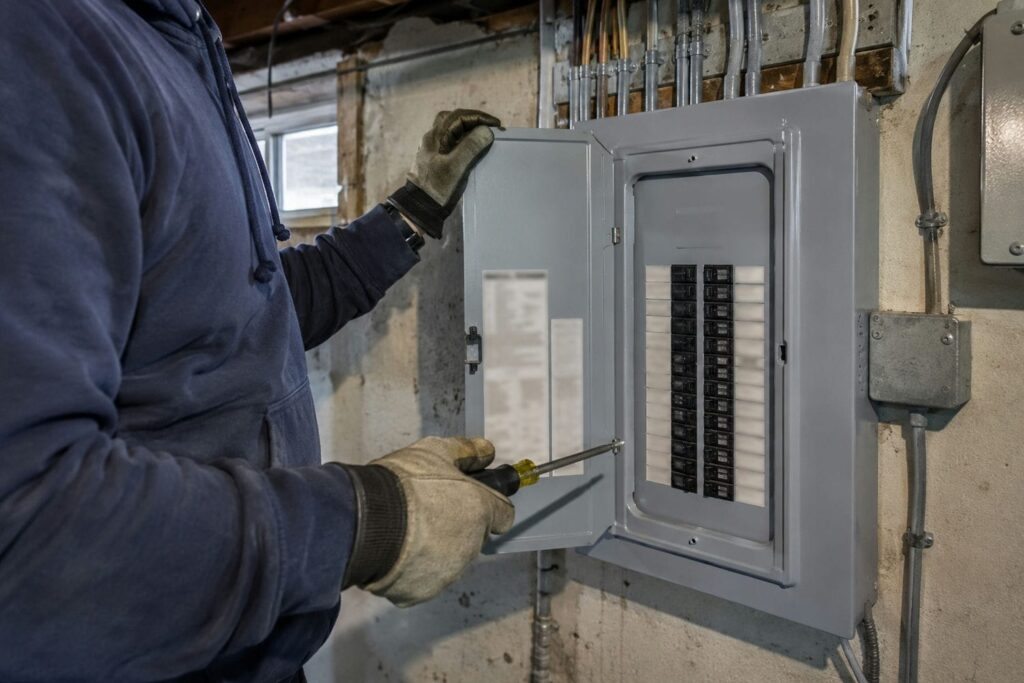
The electrical delta between the two setups is simple and it is worth pricing. Several single-zone systems mean several dedicated circuits and several outdoor disconnects. One multi-zone system usually means one of each. That difference can decide whether your existing panel copes, and on an older Toronto house with a full panel it can be a real cost swing. Checking whether you need new electrical is part of comparing the configurations honestly, not a detail to settle after the equipment is ordered.
One more thing to confirm before you sign. In Ontario the electrical work has to be reported to the Electrical Safety Authority, and the refrigeration work has to be done by someone certified in a compulsory trade, so check that your installer covers both.
Do Rebates Change Based on How Many Heads You Install
Head count and configuration do not change your eligibility. Single-zone and multi-zone are both in scope, and what decides the outcome is whether the specific model you are buying appears on the approved list. That is a model question, not an architecture question.
Two programs still get promoted on GTA contractor pages that no longer accept anyone. The Canada Greener Homes Grant is closed, and Ontario’s Home Efficiency Rebate Plus stopped taking new applicants on 5 February 2024. The current pathway is Save on Energy’s Home Renovation Savings Program, which offers up to $7,500 for a cold climate air source heat pump, with the amount set by the size of the system installed.
So do two things before you sign. Ask for the AHRI number and the model number, and have your contractor confirm in writing that the system qualifies under the current program. Rebate amounts and eligibility change, and programs close, so confirm the current terms with Save on Energy before you count the money into your budget. The detail on keeping an install rebate-eligible through the inspection stage is worth reading before the crew arrives, not after.
Get the Head Count Right Before You Compare Quotes
The configuration question gets settled by a walk through the house, not by a phone call. When our team visits, we look at which rooms actually complain and how they differ, where an outdoor unit can physically sit with proper clearance, what the panel has room for, and how condensate leaves each head. That walk is what turns a guessed head count into a defensible one. Cozy World has been doing this work since 1991, we are licensed for air conditioner installation with factory-trained installers, and the price we quote is the price you pay with no cost surprises. If you are weighing a ductless AC install against a quote already in hand, book a home assessment and we will count the rooms with you before anyone counts the heads.
Frequently Asked Questions
Common residential multi-zone units connect up to five indoor heads, and some models allow as many as eight, but building science guidance recommends connecting no more than three to a single outdoor unit. Plan around the recommendation rather than the maximum. If your list of problem rooms runs to four or five, look hard at whether every room on it genuinely underperforms before you commit.
Not automatically, and assuming it is will cost you. Multi-zone saves one outdoor unit, one pad or bracket, and one disconnect. Almost everything else scales per head: the line set, the condensate path, the wall penetration, and the labour to install each unit. Where multi-zone genuinely wins is on properties with no room for several outdoor units, which is a placement advantage rather than a discount.
Not on standard residential equipment. One outdoor unit runs in one mode at a time, so every head on the system must be set to heating or to cooling together. You can still hold different temperatures in different rooms. Equipment that genuinely heats and cools at once exists and costs considerably more. If your house wants heat on one side and cooling on the other in spring, raise it early.
Less than you would expect, and sometimes nothing at all. Savings from switching off individual indoor units on a multi-zone system range from modest to negative, because the outdoor compressor still has to serve the remaining heads and ends up working further from its efficient range. So you cannot fix an inflated head count after installation by leaving heads switched off. Get the count right at the quote stage.
No. The top-rated single-zone equipment does out-rate the top-rated multi-zone equipment, because an outdoor unit tuned to one head can be optimized in ways a shared unit cannot. But that is a comparison of the best against the best. A premium multi-zone system will out-rate a mid-range single-zone one on published ratings. Compare the two specific systems quoted, and check both numbers use the same metric.
Smaller than most people assume, and often smaller than the smallest head available, since the low end of the market starts around 6,000 BTU/h. The right answer comes from a load calculation on that specific room, covering exposure, windows, insulation and use. Oversizing is the common error and it backfires: the head short cycles, never removes humidity, and leaves the room cold and clammy.
The indoor half of the maintenance multiplies with head count. Each head has a filter to clean on a schedule, a condensate path that can clog, and an indoor coil that needs servicing, so five heads means five of each. The shared outdoor unit does not multiply. Factor the indoor total into your ownership cost, because head count fixes it permanently on install day.
Cold climate air source heat pumps can qualify for up to $7,500 under the Home Renovation Savings Program, provided the specific model appears on the approved list. Head count and configuration do not affect eligibility, so single-zone and multi-zone are treated the same way. Ask your contractor for the AHRI number and model number and have them confirm the system qualifies before you sign.
Ready to Get an HVAC Service Quote?
Whether you have questions, need assistance, or want to schedule a service, we're here to help. Don't hesitate to contact us anytime.
