
When to Replace a Furnace Instead of Repairing It
August 28, 2026 | Category: Furnace, Replacement
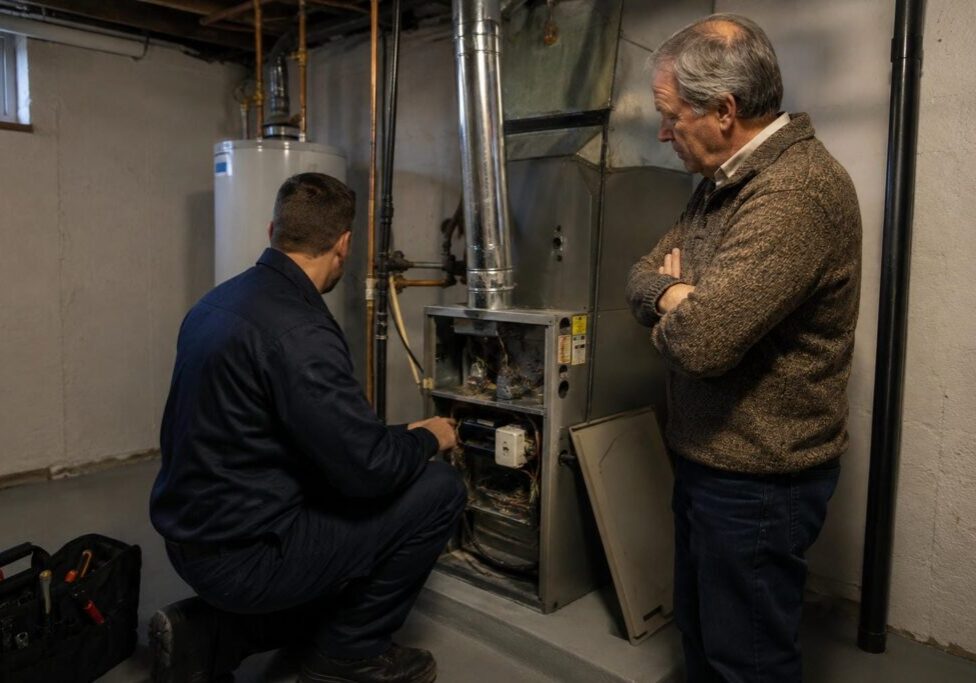
A furnace is worth repairing when three things are true at once: the failed part is routine, the unit still has years of service left in it, and nothing in the technician’s finding is unsafe. Flip any one of those and repairing stops being the smart money. That is the short answer to when to replace a furnace rather than fix it one more time.
You are probably reading this with a quote in your hand and a cold house around you. Someone has been in the basement, named a part, and given you a number. The real choice is not repair against replace. It is one more season out of the machine you already own, against a furnace replacement that resets the clock and the running costs with it.
When to Replace a Furnace: The Decision in Four Questions
A good repair-or-replace call runs through the same four questions, in this order.
- Is the finding a safety problem or a performance problem?
- How old is the unit against its expected service life?
- Which class does the failed part belong to?
- Is the part still under warranty?
Most homeowners weigh the quote and nothing else. The quote is the least informative of the four. It tells you what today’s repair costs and nothing about what the next one will cost, how many winters you are buying, or whether the manufacturer would have paid for the part anyway. Answer the four questions first. Then look at the number.
Question 1: Is This a Safety Finding or a Performance Problem?
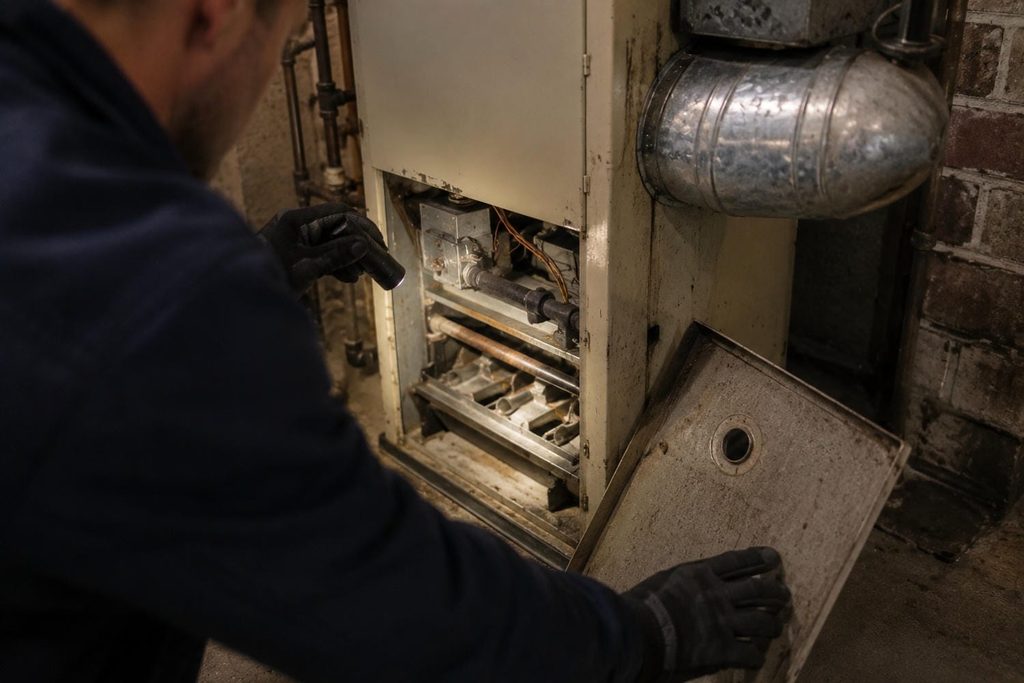
Safety findings are not an input to a cost calculation. When a technician finds a condition that makes the appliance unsafe, the furnace comes out of service, and your question changes shape. You are no longer deciding whether to spend money. You are deciding what to spend it on, and how fast.
What a Red Tag Actually Does
Everyone says red tag. Enbridge Gas calls it a Safety Violation, and it comes in two types that lead to very different weeks. A Type A finding means the appliance creates an immediate hazard, so the gas supply to that appliance or to the whole building is shut off on the spot. A Type B finding means there is no immediate hazard, and you have up to 42 days to repair or replace. Miss that window and the gas goes off anyway.
Getting back into service follows a set path. The repair has to be done by a TSSA-registered contractor, who then sends the utility the information it needs to clear the file. We hold that registration, along with the HRAI registration as an HVAC contractor. On a Type B finding the utility comes back out to verify the work, and a service charge may apply.
Cracked Heat Exchangers and Carbon Monoxide
A cracked heat exchanger is the finding that usually ends the conversation. The appliance comes out of service until it is made safe, and the question stops being whether to replace and starts being what to replace it with. The part is expensive, the labour is heavy, and the rest of the cabinet is the same age as the piece that failed. Ask to see the finding. Ask whether the part is still covered before you agree to anything.
Then count your alarms. Ontario’s Fire Code requires a carbon monoxide alarm in any home with a fuel-burning appliance, a fireplace or an attached garage. Since 1 January 2026, alarms are required on every storey, including storeys with no sleeping areas, on top of the long-standing rule about an alarm next to each sleeping area. If you heat with gas, your house is in scope, and the every-storey part is news to most people.
Question 2: How Old Is the Furnace, and How Much Life Is Left?
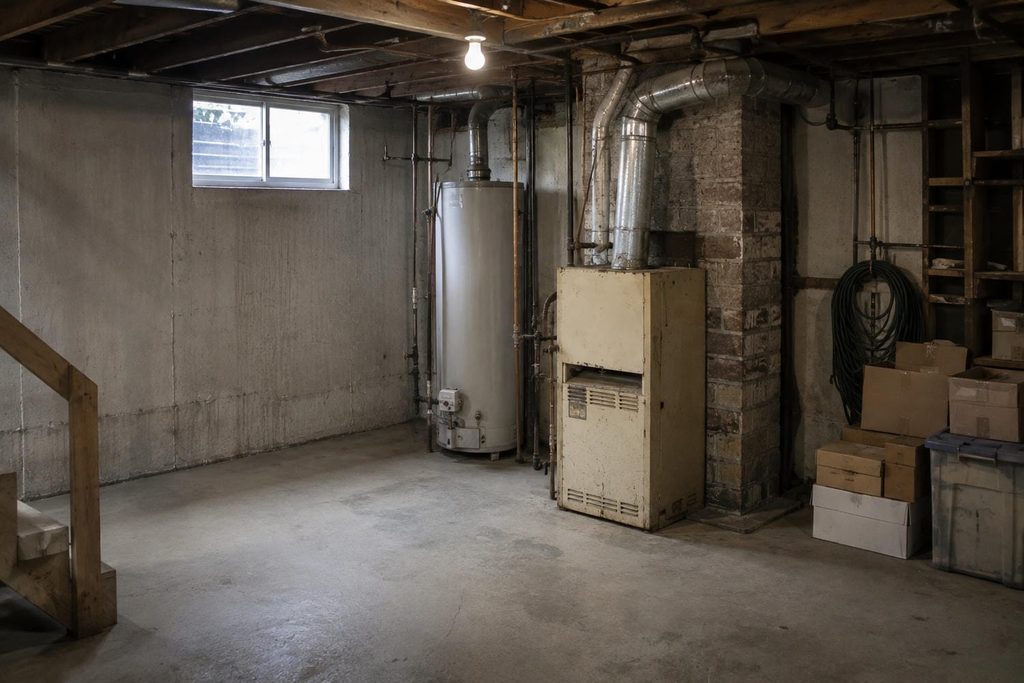
Gas furnaces typically last 15 to 20 years, according to Save on Energy, Ontario’s own energy agency. Treat that range as a proxy, not a rule. It does not predict the day your furnace dies. It tells you roughly how much runway is left, which is what decides whether a repair is an investment or a stay of execution.
What the 15 to 20 Year Range Really Tells You
Think about what the repair buys rather than whether the furnace has crossed a line. Fix a 9-year-old furnace and you are buying the better part of a decade of heat for that money. Fix a 19-year-old furnace and you are buying a winter, maybe two, and then you are back in the basement having this same conversation. Same part, same bill, very different value.
The range is a starting position. A furnace serviced every year in a dry basement is not the same machine as an unserviced one of the same age.
Then there is the input that never appears on a quote: how long you are staying. A five-year horizon and a twenty-year horizon justify different decisions on the identical furnace. If the house goes on the market in two years, a repair that carries it through is often the right call. If this is where you are raising your kids, you are buying every winter that machine has left, and the remaining runway is the whole question.
When Parts Get Hard to Find
Older units eventually reach the point where the parts network thins out. Control boards get discontinued. Inducer assemblies come out of salvage stock instead of off a distributor’s shelf. A part that would arrive next day for a current model takes a week to track down.
In January, that week is the whole story. A repair that is technically possible but practically slow is a different decision from a repair that happens tomorrow, especially when the alternative is a hotel or a house sitting at 12 degrees.
So ask the question directly: is the part in stock locally, and if not, how long.
Question 3: Which Class Does the Failed Part Belong To?
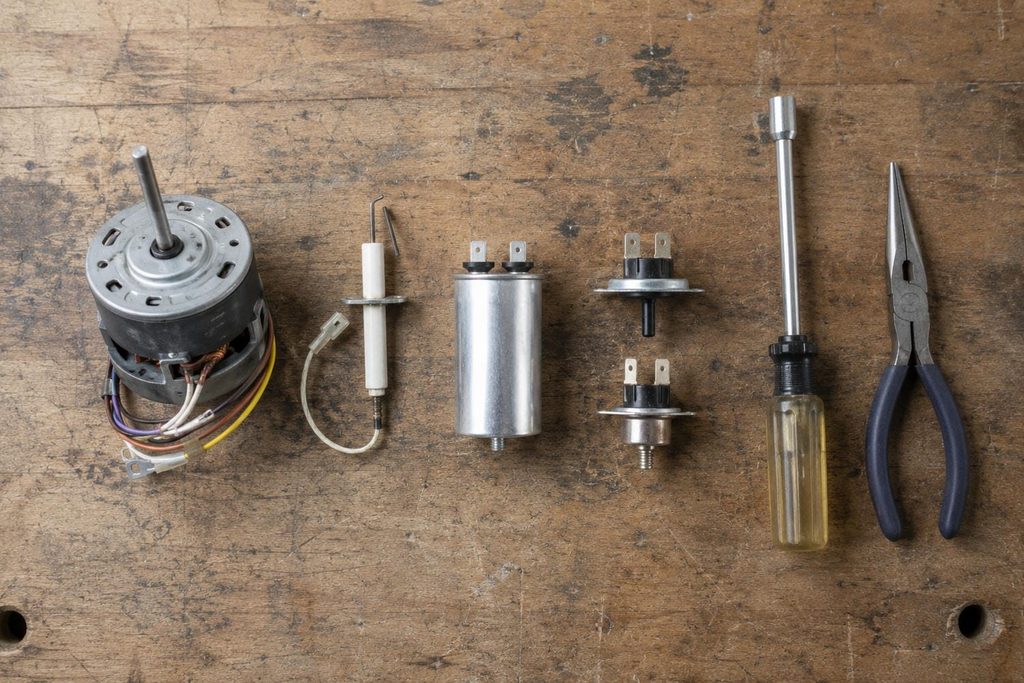
Repair bills do not cluster around an average. They sort themselves into tiers, and the tier tells you more than the dollar figure does, because it tells you whether you just replaced a consumable or watched the first domino fall. Ask your technician which tier you are in before you ask for a number.
Tier 1: Consumables and Cheap Electrics
Flame sensors, igniters, thermocouples, capacitors, limit switches and pressure switches. These are wear items. They fail on well-maintained furnaces and neglected ones alike, and replacing one is routine furnace repair that is almost always worth doing at any age, including at 19 years.
Here is the catch, and it is the one that costs homeowners the most money. A cheap consumable sometimes gets presented as a symptom of doom. The flame sensor is dirty, and somehow the conversation arrives at a new system before anyone has cleaned it. If a recommendation jumps from a small wear part straight to a full replacement, slow down and ask what evidence connects the two.
Tier 2: Motors, Gas Valves and Control Boards
Inducer motors, blower motors, gas valves, integrated control boards and ECM modules sit in the grey zone. Any one of them is survivable on a furnace with life left in it. Three of them across three seasons is not bad luck. That is a unit entering its failure cascade, and the next call is already on its way.
So reframe the arithmetic. The cost of repairing is the quote plus the probability of the next quote. On a furnace under 12, that second number is small and the repair usually wins. On a unit past 15, the second number is doing most of the work.
Frequent repairs alongside rising heating bills is the classic replacement signal. Write down the date and the part every time someone works on it. The pattern is the diagnosis.
Tier 3: The Heat Exchanger and the Chassis
At the top tier, repair stops competing. A heat exchanger swap is an expensive part plus a large labour bill, and it lands on a machine whose every other component is exactly as old as the piece that just failed. The same goes for a cracked burner box, or a chassis that a decade of condensate has rusted through. At this tier the repair bill starts to approach what a new system costs, and you are spending it on a unit with no runway ahead.
One thing can flip that. Check the warranty before you accept the quote. Heat exchangers are often the longest-covered part in the whole machine, which surprises almost everybody, and a live claim can turn a terminal number into a labour-only bill.
The Two Shortcuts You Will Hear, and How to Use Them
Two shortcuts get quoted constantly. One says replace if the repair costs more than half of a new system. The other says multiply the furnace’s age by the repair quote and replace if the result clears 5,000 dollars. Use them as a gut check before the real work, not as the answer.
What they cannot see is the useful part. Neither shortcut knows how the furnace has been maintained, which part failed, or whether that part is still covered by the manufacturer. An igniter on a 19-year-old furnace clears the second shortcut without breaking a sweat, and it is still exactly the right repair. Run the four questions, then check the shortcut against the answer you already have.
Question 4: Is the Part Still Under Warranty?
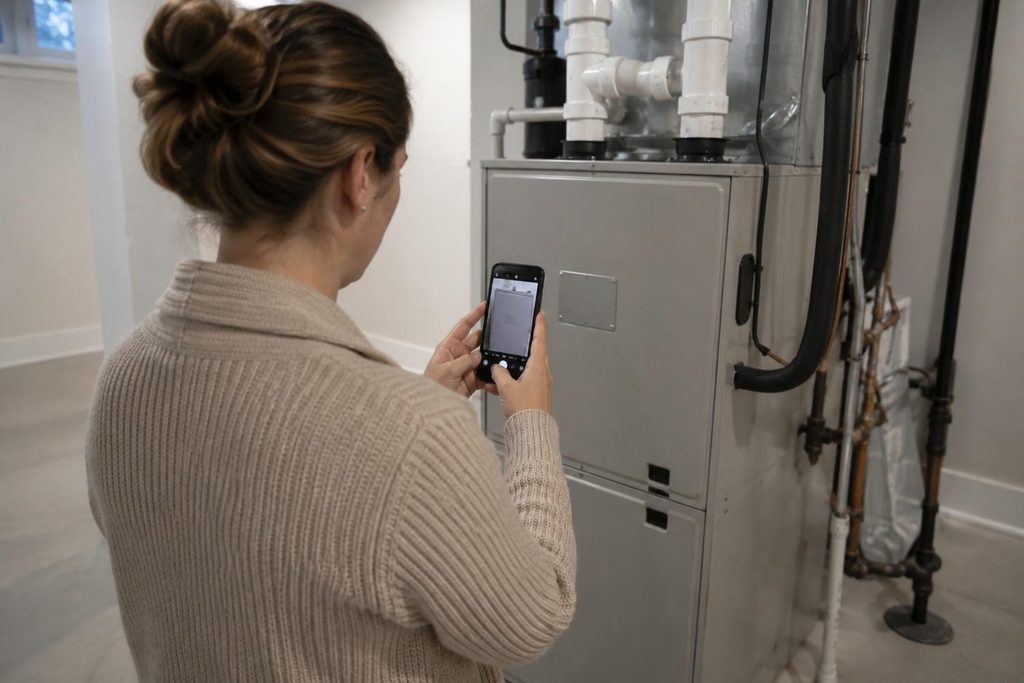
Warranty status is the most underweighted input in this decision, and it can flip the answer outright. Warranties are almost always parts only. The labour stays with you, so a covered repair is a cheaper repair, never a free one.
Terms differ by manufacturer, so check yours. As a worked example, on Lennox equipment the heat exchanger typically carries 20 years of parts coverage, and on some series limited lifetime coverage. We install Lennox as an authorized dealer, so those terms are ones we quote often. That is the opposite of what most homeowners assume about the scariest part in the machine. On those same Lennox lines, other covered components run 5 years, and 10 years on the top series.
There is a trapdoor here. Extended coverage usually depends on the unit having been registered soon after it went in. On Lennox equipment that window is 60 days from installation, or from the closing date on new construction. A lot of coverage quietly dies right there.
So before you accept any quote, find the model and serial numbers on the cabinet label. Have your installer or the manufacturer confirm coverage in writing against those numbers. It takes a phone call, and it occasionally changes the entire decision.
The Decision Table: Furnace Age Against Repair Severity
Age and severity are not two separate tests. They multiply. Severity sets the size of the bill. Age decides how much you get back for it.
The same repair changes character as a furnace gets older, not because the work is any different but because there are fewer years left to give. Find your age band and your repair tier in the table below, then read the lean. One thing overrides every cell in it: a safety finding.
| Furnace age | Tier 1 repair: sensor, igniter, capacitor, switch | Tier 2 repair: motor, gas valve, control board | Tier 3 or safety finding: heat exchanger, cracked burner box, red tag |
| Under 8 years | Repair. Routine wear on a young machine. | Repair, and check the warranty first. Coverage may still be alive at this age, and it changes the bill. | Repair if covered. A warranty claim on a heat exchanger at this age can make it labour only. |
| 8 to 12 years | Repair. | Repair. One failure here is normal. Log the date, because the pattern matters more than the part. | Get a second opinion before you decide. This is young for a terminal fault. |
| 13 to 17 years | Repair. A wear item on a machine with winters left in it. | Grey zone. First one, repair. Second or third in three seasons, price a replacement alongside it. | Lean replace. The repair lands on a machine with a few winters left. |
| 18 years or more | Repair, but start planning. Do not spend a cold night on this decision next year. | Lean replace. You are funding a machine that is out of runway. | Replace. The bill approaches a new system, and the rest of the unit is the same age as the part that failed. |
What Replacing Actually Changes
If the answer comes out as replace, the next fair question is what you are actually buying. Two things change, and only one of them is the box itself. What the machine burns changes, and so does what your basement looks like when the crew packs up.
What an Old Furnace Is Burning That a New One Would Not
Space heating is roughly 62% of what an Ontario home uses in a year, on 2023 figures. That is why this argument is worth having at all. The furnace is the largest single line on your energy bill, and it keeps running long after the repair invoice is forgotten.
Older furnaces were rated at around 65% efficiency, which means more than a third of the heat you paid for went to waste. High-efficiency units run 92 to 97%, and a furnace over 20 years old can be adding close to 32% to your energy bill, according to the gas utility. That cost lands every day, all winter. A repair is once. The efficiency gap is a subscription you renew every month.
Be careful about where the saving actually comes from. An ENERGY STAR certified furnace uses about 6% less gas than a standard new model. Useful, but modest. The real money is in retiring the 20-year-old unit, not in the badge on the new one.
For context, about 530,000 Ontario homes were still running mid-efficiency gas systems in 2023, against roughly 3.4 million on high-efficiency systems. You are not alone. You are in the minority.
In a GTA House, a New Furnace Is a Condensing Furnace, and That Changes the Basement
New gas furnaces sold in Canada have to meet a 95% efficiency minimum, for units manufactured on or after 3 July 2019. So putting in another mid-efficiency unit is not a route that exists for a typical GTA house. The regulations carry one exception, and it is a replacement non-condensing unit for a manufactured home.
Physically, three things change. The exhaust leaves through side-wall PVC instead of the old chimney, which means a hole through the wall and a route for the pipe. The furnace now produces condensate, which has to drain somewhere, and plenty of basements have no drain nearby. And if a gas water heater shared that old chimney, it is left venting alone into a flue sized for two appliances. Each one is a cost people do not see coming.
Sizing matters as well. The replacement gets sized to the house, not copied off the old nameplate, which is how oversized short-cycling furnaces end up in basements.
Permits are set by your city and are not the same across the GTA. Toronto does not require a building permit to replace a furnace or boiler in a house, while Mississauga does when the new unit is higher efficiency than the old one or the ductwork changes. We confirm what your municipality requires before the job is booked.
The Money Question: What Ontario Actually Pays For
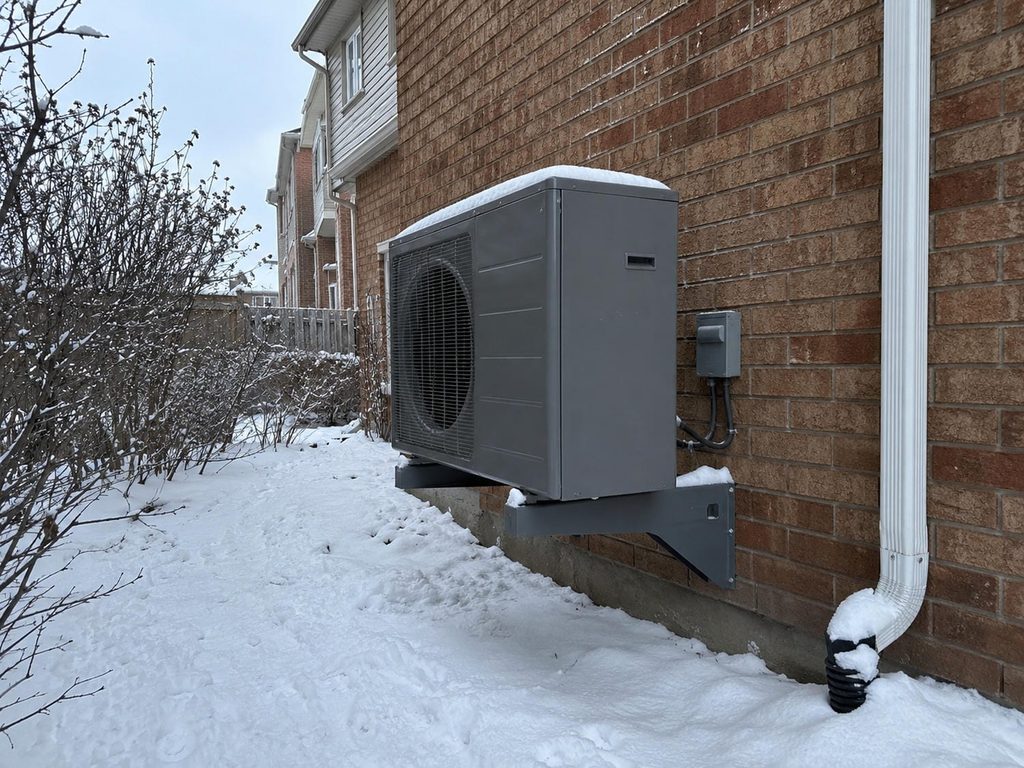
Rebates in Ontario are real money, and they are pointed at particular equipment rather than at heating in general. Knowing which equipment qualifies before you commit is worth more than any single quote you collect, because it can change what you buy and not just what you pay for it.
Which Upgrades Ontario Rebates Cover
The program to know about is the Home Renovation Savings Program, run by Save on Energy together with Enbridge Gas. Search it by that name, because that is what the rebates are listed under. Here is what it covers: heat pumps, solar and battery storage, insulation, windows and doors, air sealing, heat pump water heaters, smart thermostats and some appliances. A high-efficiency gas furnace on its own is not on that list.
The Canada Greener Homes Grant is closed. This is the most common outdated belief on the subject, and it costs people real planning time. Applications ran from May 2021 to February 2024, the deadline for uploading documents has passed, and the program has wound up entirely. There is nothing left to apply for.
Enbridge keeps pages up for more than one rebate program, which makes it easy to read the wrong one and build a plan around it. Confirm which rebate program applies to you and get the answer in writing before you sign. Amounts and eligibility have already changed once during this program’s life. Confirm current amounts on the program’s own page before you sign.
If Rebates Matter, Price the Heat Pump Route Too
Start with the condition that costs people the entire rebate. Pre-approval is mandatory, and an installation done before approval is not eligible. If your furnace died on a Tuesday, the fastest path and the funded path are not the same one. For a home heated with gas, Ontario heat pump rebates on a cold climate air source unit run up to $2,000, calculated per ton of rated heating capacity. A larger rebate exists for homes heated by electricity, oil, propane or wood, so the bigger figures are not yours if you are on gas.
You also have to own the home, live in an eligible housing type, choose equipment from Natural Resources Canada’s qualified products list, and use a contractor the program recognizes. Have your installer confirm approval and eligibility before anything is ordered. Whether a heat pump suits your house is a bigger question, and it is worth pricing both before you commit.
Timing: Why Deciding in January Is the Expensive Version
The worst time to make this decision is at 11pm in a cold house. Emergency decisions reliably produce the most expensive version of whichever choice you make, because you have no time to compare, no leverage with anybody, and no appetite to wait for a second look.
An Annual Inspection Makes This Decision Before You Have To
Have the furnace inspected every year by a TSSA-registered contractor. That is the interval Ontario’s safety authority and the gas utility both use, and the payoff is not really about efficiency. An annual furnace tune-up is what finds a hairline crack in a heat exchanger in October, when you have time to gather quotes, instead of in January, when you do not. That visit is also where the repair-or-replace conversation happens on your terms, in daylight, with the heat still on. And the furnace is not the only fuel-burning appliance in a typical home, which is why a proper inspection covers all of them.
If the Heat Is Already Out
If you are reading this in a cold house, change the order of operations. Get the heat restored or the house made safe first. Make the repair-or-replace call in daylight, with a second quote if the number is large. Those are two separate decisions, and they do not have to happen in the same hour.
A temporary repair that carries you through the week is a legitimate move, not wasted money, when the alternative is signing off on a whole system at midnight. We have taken plenty of these calls over the years, and the ones that end badly are almost always the ones where somebody decided while they were cold, tired and out of options.
When the house is already cold, getting emergency help faster is the first problem to solve. The buying decision keeps until morning.
Reading the Diagnosis, and When to Get a Second Opinion
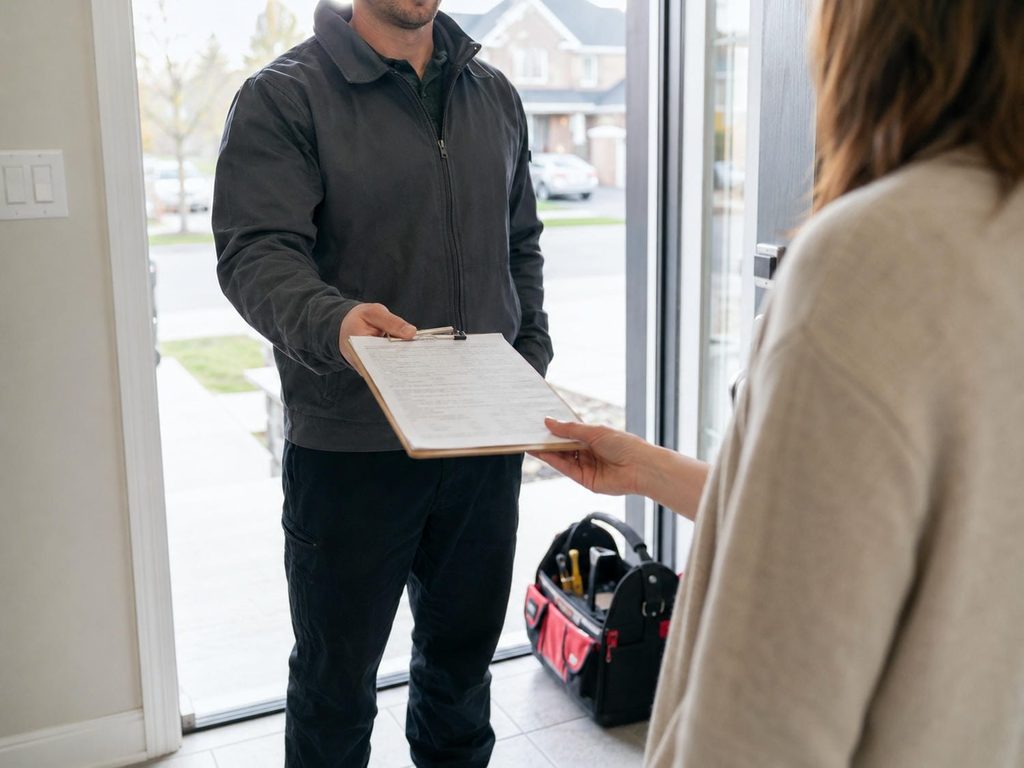
Your decision is only as good as the information underneath it. Most bad repair-or-replace calls trace back to a diagnosis nobody wrote down, where the homeowner remembers a verdict and nothing that supports it. Two habits fix that: knowing what a real diagnosis contains, and knowing when to ask somebody else.
What a Good Diagnosis Puts in Writing
Hold your contractor to a short list. The failed part named specifically, not “the furnace is done”. Whether the finding is a safety issue or a performance issue, stated plainly, because those two lead to different decisions. The model and serial recorded, with warranty status checked against them. The recommended repair and its cost, kept separate from any replacement proposal. And if a heat exchanger is called, the evidence for it: what was seen, where, and how.
None of that is an unreasonable ask. A technician who has genuinely diagnosed the machine can produce it in a few minutes, often before leaving the driveway. A verdict that cannot survive being written down is usually a verdict nobody has fully reached yet.
When a Second Opinion Is Worth the Call
You do not need a second opinion every time. Four situations earn one. A terminal diagnosis on a unit under about 12 years old. A replacement recommended off the back of a Tier 1 part. A diagnosis that arrives verbally with no written finding. A quote that will not separate the repair from the replacement.
Then there is who gives it. The gas utility itself points homeowners to the TSSA contractor listing and the HRAI contractor locator, which makes those two registrations the first check to run when you are choosing an HVAC contractor to call. We hold both.
Get the Diagnosis in Writing Before You Decide
This decision gets easier when somebody shows you the finding, checks the warranty against your model and serial, and gives you both prices without steering you. Then you think it over with the heat on.
Cozy World has been doing exactly that in Toronto, Richmond Hill and Burlington basements since 1991. We are a TSSA registered heating contractor and an HRAI registered HVAC contractor, the two registrations the gas utility itself names when it tells homeowners how to check who they are hiring. Plenty of the calls that start with “replace my furnace” end with a flame sensor, and we will say so when that is what we found.
When replacement really is the answer, there are no cost surprises: the new system cost is exactly as quoted. If you have a diagnosis in hand and want a second set of eyes on it before you spend anything, book a visit with our team.
Frequently Asked Questions
Depends entirely on the part. A sensor or igniter, yes, without hesitation. A blower motor, probably, if it is the first one. A heat exchanger, almost never. At 15 the machine still has a few winters in it, so the answer turns on what failed, not on the age alone.
The gas utility calls it a Safety Violation. A Type A finding means immediate danger and the gas is shut off right away. A Type B finding gives you up to 42 days to repair or replace before the supply is shut off. A TSSA-registered contractor does the work and reports it back to the utility, which comes back to verify a Type B repair.
Usually, but for economic reasons rather than an automatic rule. The appliance comes out of service until it is made safe, and the cost of the part plus labour lands on a machine whose other components are the same age. Ask to see the finding, and check the warranty before you decide.
Get the model and serial off the cabinet label and have coverage confirmed against them. Terms differ by manufacturer, so check yours. On Lennox equipment, the heat exchanger typically carries 20 years and sometimes limited lifetime coverage, while other covered parts run 5 to 10 years depending on the series. Warranties are parts only, so the labour is still yours.
Ontario’s current rebates through the Home Renovation Savings Program go to heat pumps, insulation, windows and doors, air sealing, heat pump water heaters, smart thermostats and some appliances. A high-efficiency gas furnace on its own is not among them. If rebate money is part of your plan, the heat pump route is where it sits, and pre-approval is required before installation.
You can, and it is often the right call for a few years. What catches people is that each repair looks reasonable on its own while the pattern does not. Track the dates and the parts. Three mid-tier failures in three seasons on a unit past 15 is a machine telling you something.
If your home has a fuel-burning appliance, a fireplace or an attached garage, Ontario’s Fire Code requires carbon monoxide alarms. Since 1 January 2026 they are required on every storey, not only next to sleeping areas. If you heat with gas, your house is in scope, so count your alarms by floor before winter.
Recent Posts
Ready to Get an HVAC Service Quote?
Whether you have questions, need assistance, or want to schedule a service, we're here to help. Don't hesitate to contact us anytime.
