
What Size Heat Pump Do I Need For My Home In Ontario?
January 1, 2026 | Category: Heat pump, Installation
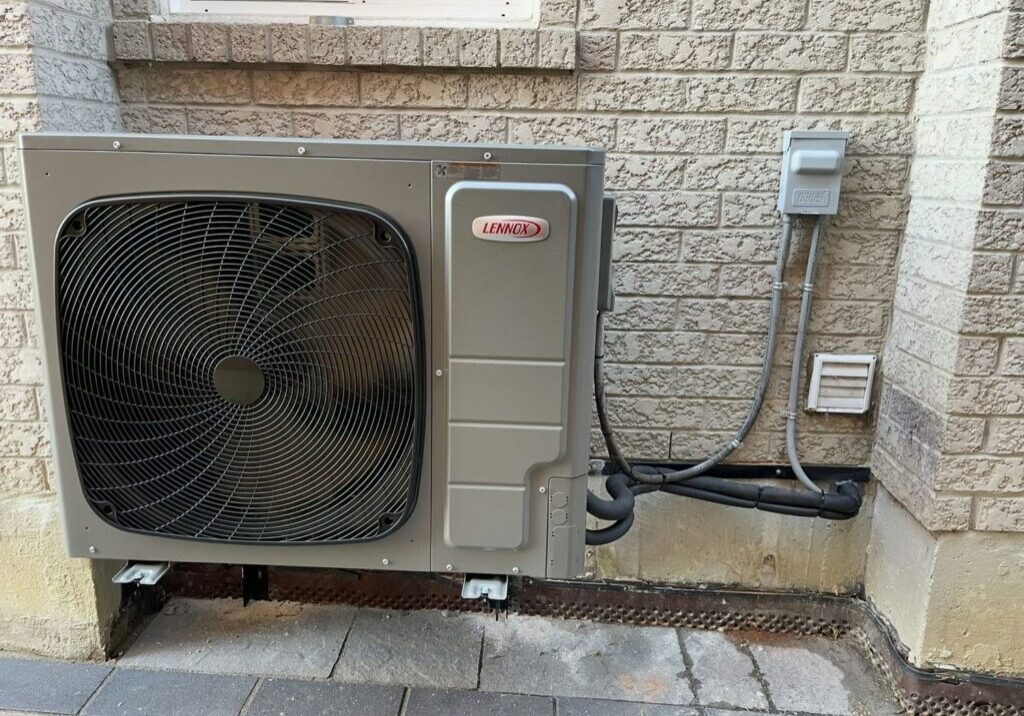
Heat pump sizing in Ontario is not a square-foot shortcut. It’s a comfort decision that has to work in humid summers and freezing winters, while still matching what your ducts can move. If you’re planning a heat pump installation, start with how your home delivers air and what the system needs to stay stable in July and January.
Here’s the catch: the “right size” for winter heating is not always the right size for summer comfort. If you oversize to chase winter capacity, you can create short cycling, noisy airflow, and a cool-but-humid house.
This guide breaks sizing down into what actually matters in Ontario homes: tons, BTU, airflow (CFM), humidity control, and why backup heat often shows up below 0°C.
Heat Pump Sizing In Ontario: The Fast Answer
Heat pumps are asked to do two jobs in one system: cool and dehumidify in summer, then heat in winter when outdoor capacity drops. That tug-of-war is why smart sizing is about balance, not maximum tonnage.
If you remember one thing from this page, make it this: match your cooling and airflow realities first, then plan your heating strategy around Ontario’s colder days.
Do Not Size Only For Winter Heating
A heat pump is not just a heater. It is also your air conditioner, and in the GTA that means it has to handle humidity as well as temperature.
When a system is oversized, it can cool the air too fast and shut off before it removes enough moisture. The thermostat looks happy, but the house feels sticky and uncomfortable.
So the practical approach is usually: size for summer comfort and stable run times, then handle deep-cold heating with a clear backup plan.
Airflow Is The Hidden Limit Most Homeowners Miss
Heat pumps relocate heat, and that process depends on moving a lot of air across the indoor coil. If the system needs airflow your ducts cannot deliver, you get noise, uneven temperatures, and poor comfort that looks like “bad equipment.”
Many Ontario homes have the main duct trunks and the furnace or air handler in the basement. That means the system has to push air up one, two, sometimes three levels, which is harder than it sounds when you increase tonnage.
Bigger equipment demands more airflow. If your ducts are not built for it, upsizing can make comfort worse.
Expect Backup Heat Below 0°C In Many GTA Homes
On freezing days, there is less heat available outdoors to pull inside. That’s not a brand problem. It’s physics plus house demand.
That’s why many Ontario heat pump setups rely on backup heat below a certain temperature, especially in older homes or homes with higher heating loads. The goal is not to avoid backup at all costs. The goal is to keep comfort steady and operating costs predictable.
A good sizing plan tells you when backup heat comes on and why, before you ever approve the quote.
Heat Pump Sizing Basics: Tons, BTU, And Airflow

Before you can compare sizes, you need a few clean definitions. Once you understand these, most “mystery sizing” conversations become obvious.
This also helps you spot a quote that’s built on assumptions instead of measurements.
Quick Definitions
BTU (British Thermal Unit) is the amount of heat moved per hour. Tonnage is a cooling capacity label, where 1 ton equals 12,000 BTU/hour of cooling. CFM (cubic feet per minute) is the airflow your system moves through the ducts.
Heat pump sizing means choosing equipment that matches your home’s cooling and heating load, and can actually be delivered through your ductwork quietly.
If a quote only gives you tonnage with no airflow or duct assumptions, it’s missing a key part of the sizing story.
Tons Vs BTU Vs Required Airflow (CFM)
A common rule of thumb is about 400 CFM per ton of cooling. Your actual target can vary by system design, but this gives you a solid “sanity check” when someone suggests upsizing.
| System Size | Cooling Capacity (BTU/hr) | Typical Airflow Target (CFM) |
| 1.5 Ton | 18,000 | ~600 |
| 2.0 Ton | 24,000 | ~800 |
| 2.5 Ton | 30,000 | ~1,000 |
| 3.0 Ton | 36,000 | ~1,200 |
If your duct system cannot support the airflow, the equipment cannot perform the way it’s rated. That’s when you get noise, comfort complaints, and “it never feels right” symptoms.
Why “More Tons” Can Make Comfort Worse
Upsizing is not free. More tonnage usually means more required airflow, and that can expose weak returns, undersized trunks, and balancing problems you never noticed before.
In real homes, the result can be brutal: the basement gets cold fast, the upstairs stays warm, and the ducts get noisy because the system is trying to force airflow through a bottleneck.
Comfort is not just capacity. Comfort is capacity delivered evenly, quietly, and long enough to control humidity.
Why GTA Heat Pump Sizing Is Tricky
Ontario sizing is tricky because our seasons pull the system in opposite directions. Summer comfort needs longer, steadier cycles to remove humidity. Winter comfort needs enough capacity when outdoor output drops.
Add basement duct systems and older electrical panels, and you get the real retrofit challenge.
Humid Summers Mean You Need Longer Run Times
In the GTA, humidity is a big part of comfort. Your heat pump removes humidity by running long enough for moisture to condense on the indoor coil and drain away.
Oversized systems often cool the house quickly and shut off. That short cycling can leave humidity behind, so the house feels clammy even when the temperature looks fine.
That’s why “bigger is better” fails in summer. You want a system that runs steadily, not one that sprints and stops.
Basement Duct Trunks Must Push Air Up Multiple Floors
Many GTA homes have the air handler or furnace in the basement, with main trunks starting there. Cold air is heavier, and pushing a lot of cold air up to higher floors is harder when the duct system is tight or unbalanced.
If you oversize and increase required airflow, the system may blast the basement and main floor while the second floor still lags behind. It feels like the system is strong, but the distribution is wrong.
That’s why airflow, duct size, and balancing matter as much as tonnage in multi-level Ontario homes.
Heat Pumps Relocate Heat, And Winter Outside Air Has Less To Pull From
A heat pump relocates heat from outside to inside. When it’s very cold, there’s less heat available outdoors and the system’s capacity drops.
This is why winter sizing is not just “pick a bigger unit.” The real question is how much heat the unit delivers at Ontario temperatures, and what the backup strategy is for the coldest stretches.
If you want the short list of specifications that actually matter for Ontario winter output, use this guide as your reference point.
A Typical 2,000 Sq Ft GTA Home

Examples help, but they can also mislead if you treat them like rules. So read this as a real-world illustration, not a promise of what your home needs.
Loads change with insulation, windows, layout, sun exposure, and duct design. Two 2,000 sq ft homes can need different answers.
Cooling Example: 2 Ton Can Be The Right Fit For Airflow
In a typical 2,000 sq ft GTA home, it’s common to see a 2-ton (24,000 BTU) cooling requirement as a workable starting point. That size typically targets about 800 CFM of airflow, which is often more realistic for existing duct systems.
This matters because the system has to deliver that air across multiple levels. When the airflow target is reasonable, it’s easier to move cold air upstairs and keep the house balanced.
The “right” cooling size is the one that stays on long enough to manage humidity without turning the ductwork into a noise problem.
What Happens If You Jump To 3 Ton Without The Ducts
If you jump from 2-ton to 3-ton, your airflow target jumps from about 800 CFM to about 1,200 CFM. That’s a big change for ductwork that was never designed for it.
In real homes, this can get loud. You can also end up freezing the basement in summer while the upstairs still runs warm, because the system can’t deliver airflow evenly where it’s needed.
If you’re unsure whether your ducts can support the airflow of a larger system, start with a duct reality check before you upsell yourself into problems.
Heating Example: Why Backup Heat Shows Up Below 0°C
For that same “typical” 2,000 sq ft home, a cold-day heating requirement can be far higher than the cooling requirement. As a rough example, you might need around 70,000 BTU of heat on the coldest days, depending on insulation and air leakage.
A heat pump sized for great summer comfort might not cover that full heating load when temperatures drop below 0°C. That’s why backup heat often carries the load in the coldest weather, while the heat pump does most of the work in milder winter conditions.
A good design makes this behaviour explicit. It tells you what the heat pump covers, when backup takes over, and how the system will be controlled.
Oversized Vs Undersized: What It Feels Like In Real Life
Sizing mistakes show up as “comfort problems,” not as a warning light. That’s why homeowners often blame the equipment when the real issue is fit.
Use these symptoms as your gut-check when you’re reading quotes or living with an existing system.
Signs Your Heat Pump Is Oversized
Oversized systems often short cycle. They turn on, blast, and shut off, which can leave humidity behind in summer and create temperature swings in shoulder seasons.
You may also notice louder airflow, more drafts, or a basement that feels colder than it should while the second floor still struggles. That’s a classic airflow mismatch.
A house can be the “right temperature” and still feel uncomfortable when cycles are too short and distribution is uneven.
Signs Your Heat Pump Is Undersized
Undersized systems tend to run for long periods and may struggle on peak days. In winter, that can mean the system relies heavily on backup heat or never quite catches up during cold snaps.
In summer, an undersized system may run constantly and still feel warm, especially if insulation and air leakage are poor. That’s a signal the load is higher than expected.
One note: longer run times are not automatically bad. The red flag is running long while still missing comfort targets.
How To Avoid Both (Without Guessing)
The fix is not guessing bigger or smaller. The fix is sizing based on load plus delivery. That means a proper load calculation and an honest airflow check.
If you want a clear list of the most common heat pump installation mistakes that cause sizing-like comfort problems, this is worth reading before you sign a contract.
When the home, ducts, and controls are treated as one system, sizing gets simpler.
Airflow And Duct Limits: The Part That Decides Your Real Size
In forced-air systems, ducts are not a detail. Ducts are the highway. If the highway is too small, adding a bigger engine doesn’t help.
This is why two contractors can recommend different sizes for the same home. One is assuming duct capacity. The other is measuring it.
Your Ducts Must Support The CFM Your Heat Pump Needs
Every size increase raises the airflow target. If your duct system can’t move that air, you’ll see higher noise, poor room-to-room balance, and lower comfort.
Common constraints include undersized returns, tight trunk lines, long runs to upper floors, and high static pressure that chokes airflow. These are common in older homes and in homes with renovations or additions.
A sizing conversation that ignores ducts is incomplete, even if the equipment itself is high quality.
Quick Duct Reality Check Before You Size Up
If you already have comfort issues, don’t assume bigger equipment will fix them. Look for warning signs like whistling vents, rooms that never match the thermostat, weak return airflow, or big temperature swings between floors.
These symptoms often mean the ductwork needs attention, balancing, or return improvements more than it needs extra tonnage. When you check the ducts first, you avoid paying for capacity you can’t deliver.
If you want a homeowner-friendly way to judge whether your existing ducts are a fit for a heat pump, start here.
Electrical Constraints: Bigger Equipment Can Change The Scope
Sizing is not only about comfort. It also affects install scope. In older Ontario homes, electrical constraints can determine what’s practical without upgrades.
This is where “I’ll just go bigger” can turn into a surprise project.
What Usually Changes In Older Ontario Homes
Electrical scope can change based on panel capacity, available breaker space, the distance to the outdoor unit, and what disconnect and wiring routing is required.
If the panel is already full, you may need upgrades or reconfiguration before you can support the equipment you want. If the wire run is long, that can change labour and materials.
A responsible quote makes these assumptions visible. A vague quote pushes them into surprises.
Why Electrical Planning Belongs In Sizing, Not After
If you choose a size first and deal with electrical later, you risk redesigning mid-project. That’s when timelines slip and costs jump.
When you confirm electrical constraints early, you get a sizing recommendation that’s actually buildable. It also lets you compare quotes fairly, because scope is clearer.
If you’re unsure what electrical items should be discussed before you commit to a size, this guide breaks it down for homeowners.
How We Actually Size A Heat Pump For GTA Homes
We size for comfort, not marketing labels. That means treating your home as a system: load, airflow, controls, and winter strategy.
This also creates better quotes. When assumptions are written down, you get fewer surprises.
Step-By-Step Heat Pump Sizing Checklist
- Confirm your current comfort issues (where, when, and why)
- Review insulation, windows, and layout factors that change loads
- Estimate cooling needs for humid summer days (temperature plus dehumidification)
- Check ductwork and confirm realistic airflow targets (CFM)
- Select equipment by performance at Ontario temperatures, not just “rated tons”
- Plan backup heat strategy and control setpoints for sub-zero days
- Confirm electrical capacity and the wiring path to the outdoor unit
- Commission the system and balance airflow after installation
This approach keeps you out of the common trap: buying bigger equipment to solve a distribution problem.
A Government Reference Point For Sizing
For homeowners who want a neutral reference, Natural Resources Canada has an air-source heat pump sizing and selection guide. It’s not a replacement for a site visit, but it’s a useful overview of why climate, load, and equipment performance matter.
What To Ask For When You Get Quotes
A good quote doesn’t just name equipment. It explains why that equipment fits your home and what assumptions were used.
If a contractor can’t explain the sizing logic clearly, you’re being asked to trust a guess.
Ask For Loads And Assumptions, Not Just Tonnage
Ask what your heating and cooling loads are, or at least what the sizing was based on. Loads should reflect your insulation, windows, layout, and how the home behaves in real weather.
Also ask what assumptions were made. If the quote assumes “good ducts” or “no electrical upgrades,” that should be written down.
A clear quote makes it easier to compare contractors without getting lost in brand names.
Ask For Airflow And Duct Scope In Writing
Ask what airflow (CFM) the selected system requires and whether your ducts can support it. If duct changes or balancing are needed, the quote should say so.
If the contractor says “standard install,” ask what that includes. Airflow problems do not fix themselves, and bigger equipment often makes them louder.
Clear duct scope is one of the easiest ways to avoid comfort regret.
Ask How Backup Heat Will Be Used Below 0°C
Ask what the backup heat source is and how the system decides when to use it. You want to know the switch-over strategy, because that’s what determines comfort and cost in deep cold.
You also want to know whether the plan is to run the heat pump as much as practical above freezing, then rely on backup in colder conditions. That approach often makes sense in Ontario.
A good contractor will explain this without drama and put the plan in writing.
Get The Right Size Heat Pump The First Time
Heat pump sizing is not about picking a number. It’s about matching your home’s real cooling needs, your duct airflow limits, and a winter plan that holds comfort when temperatures drop. Cozy World has been in business since 1991, we’re an Authorized Lennox Dealer, and our installers are factory trained. If you want clear sizing logic, clear scope, and no HVAC cost surprises, the next step is to book a consultation and install a heat pump the right way.
Frequently Asked Question
The right size depends on cooling load, duct airflow (CFM), insulation, and how much heat the unit delivers at Ontario temperatures. Many homes are best sized for summer comfort first, then backed up for sub-zero heating. The only reliable answer comes from a load calculation plus an airflow reality check.
Square footage is a rough starting point, not a sizing method. Two 2,000 sq ft homes can have different loads because of insulation, windows, layout, and air leakage. Use square footage only as a prompt to get a proper assessment.
Not usually. Bigger systems need more airflow, and they can short cycle in summer, leaving humidity behind. Bigger also increases the odds of noisy ducts and uneven comfort if your ductwork can’t deliver the required CFM.
Expect short cycling, weaker dehumidification, more noise, and temperature swings. In many multi-level homes, oversizing can overcool the basement while the second floor still lags. It feels powerful, but it’s not comfortable.
A common rule of thumb is around 400 CFM per ton of cooling, so 2-ton is roughly 800 CFM and 3-ton is roughly 1,200 CFM. Your duct system has to support that airflow quietly. If it can’t, the system won’t perform as intended.
Many homes do, especially below 0°C, depending on the home’s heating load and the heat pump’s cold-weather output. The goal is a clear plan for when backup runs and why. That should be explained in the quote and in the control strategy.
Yes. Ductwork is the delivery system. If ducts are undersized, leaky, or poorly balanced, upsizing can make comfort worse. Confirm duct capability before you approve a larger size.
Ready to Get an HVAC Service Quote?
Whether you have questions, need assistance, or want to schedule a service, we're here to help. Don't hesitate to contact us anytime.
