
AC Leaking Water? What Toronto Homeowners Should Check First
April 13, 2026 | Category: Air Conditioner

An AC that is leaking water usually means the system is removing humidity, but that moisture is not draining where it should. In Toronto homes, the usual culprits are a clogged condensate drain line, a frozen coil that is thawing, a cracked drain pan, or a failed condensate pump. If you see active dripping or ice, shut cooling off, protect the area, and get the system looked at. A targeted air conditioner repair solves the underlying drainage fault rather than masking the symptom.
That does not automatically mean your whole system is done. However, water around a furnace, basement floor, or electrical area should never be brushed off as “just condensation.” Small leaks turn into stained drywall, damaged flooring, rust, and repeat service calls when the real cause is left alone.
A central AC leak happens when moisture removed from indoor air does not drain away properly. That is the whole issue in one line.
Start Here: What To Do In The First 10 Minutes

The first job is not diagnosis. It is stopping more water damage and spotting the red flags that tell you this is no longer a wait-and-see problem. A leaking AC can still be a repair-first situation, but only if you keep the damage contained and avoid forcing the system to run through the fault.
Toronto homeowners often find the leak near the furnace, not beside a piece of equipment labelled “AC.” That is normal in a central system, because the indoor cooling coil often sits above the furnace cabinet. So, if you see water in that area during cooling season, treat it like an AC symptom first, then confirm the source.
Shut Off Cooling If You See Ice Or Active Dripping
If the line or coil is iced up, or if water is actively dripping onto the floor, shut the cooling off. A frozen system does not need more runtime. It needs the right diagnosis, because continued operation can add more water, more strain, and more confusion.
Do not keep lowering the thermostat hoping it will somehow “push through” the problem. That usually makes it worse. If the leak is tied to freeze-thaw behaviour, forcing more cooling just piles on more ice before you end up with more meltwater later.
Protect Floors, Drywall, And The Furnace Area
Move rugs, boxes, or anything absorbent away from the leak area. If it is practical, use towels or a shallow tray to catch water and keep it from spreading across finished flooring or under nearby walls. This is not a dramatic step. It is simple damage control.
Water near the furnace area also deserves respect because basements and utility rooms tend to hide the problem until there is already staining, swelling, or rust. What looks like a small AC leak can quietly become a much bigger clean-up when it sits for hours.
Confirm The Water Is Coming From The AC, Not Plumbing Or Another Appliance
In summer, water around the furnace often points back to the AC coil above it, not to the furnace itself. That said, it is still worth ruling out obvious non-AC sources like a nearby plumbing drip, a humidifier line, or another appliance in the room. You do not need a full inspection here. You just want to avoid blaming the wrong system.
If the water appears only when the AC has been running, that is another clue. So is weak cooling, a damp smell near the coil cabinet, or a leak that shows up more on hot, sticky days.
Why An AC Produces Water At All
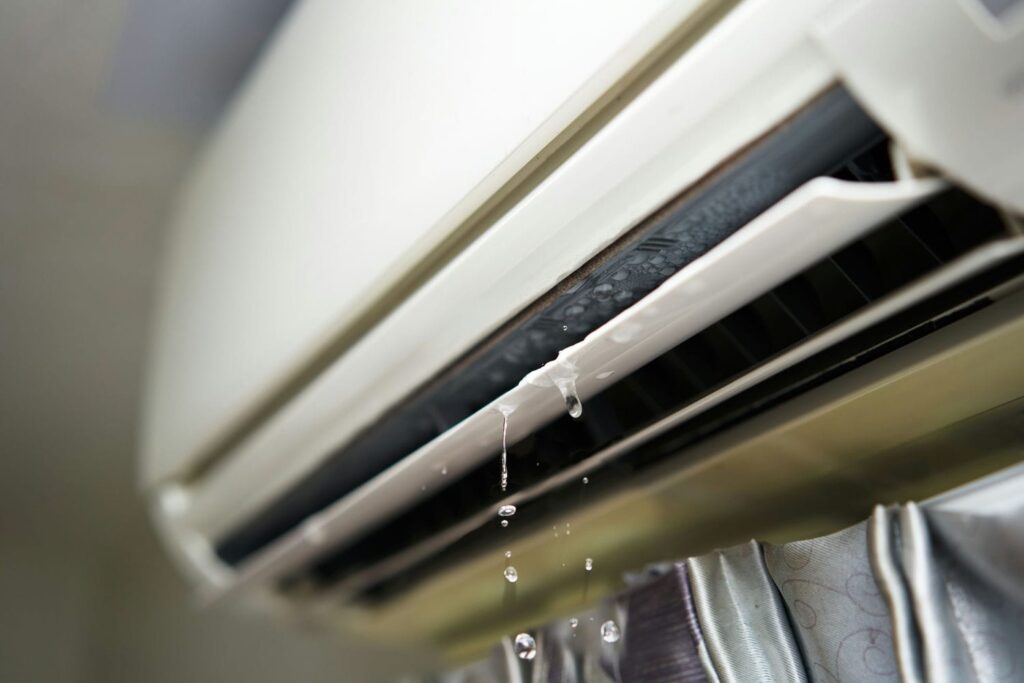
A central air conditioner does more than cool the air. It also removes moisture from it. When warm indoor air passes over the cold evaporator coil, humidity condenses into water, and that water is supposed to collect in a drain pan and leave through a drain line or pump.
Here is the catch. Water inside the system is normal. Water on the floor is not. When the drain path is blocked, disconnected, cracked, poorly sloped, or overwhelmed by a freeze-thaw cycle, the moisture ends up where it should never be.
That simple idea explains most AC leak calls. The leak is the symptom you notice. The actual fault is usually a drainage problem, an airflow problem, or a cooling problem that later turns into a drainage mess.
Quick Diagnosis Table: What The Leak Usually Means
Different leak patterns point to different underlying faults. The table below pairs the most common things homeowners notice with the likely cause, a safe first check you can do yourself, and the appropriate next step.
| What You Notice | Most Likely Cause | Safe First Check | Best Next Step |
| Water around the furnace base | Clogged drain line or pan overflow | Look for active drip and check filter condition | Book repair |
| Leak after weak cooling or visible ice | Frozen coil thawing | Shut cooling off | Book repair |
| Pump reservoir full or humming | Failed condensate pump | Visual check only | Book repair |
| Rust or staining around the cabinet | Old pan or repeat overflow | Inspect visible rust | Diagnose repair vs. age-related issue |
| Leak mostly on hot, humid days | Marginal drainage or airflow problem | Check filter and visible drain path | Service call if it repeats |
The main pattern is simple. Water on the floor usually tells you the system is not draining normally, but it does not tell you why. That is why a clogged line, a frozen coil, and a failing pump can all look similar from across the room.
7 Common Reasons Your AC Is Leaking Water
Water is the symptom, not the root cause. The smartest way to think about this is to move from the most common and fixable explanations toward the less common ones that hint at a larger problem. That keeps the article practical and keeps the diagnosis honest.
Clogged Condensate Drain Line
This is the most common place to start. Dust, slime, algae, and debris can build up in the condensate line over time and slow the drainage enough for water to back up into the pan and spill over. The leak may look sudden, but the blockage usually was not.
A clogged line is also why some leaks seem to come and go. On a mild day, the system may produce just enough water to drain slowly. On a humid Toronto day, that weak drain path gets overwhelmed fast, and the problem shows up on the floor.
Dirty Filter Or Blocked Airflow
A dirty filter can do more than make the house feel stuffy. It can restrict airflow enough to upset the cooling cycle and set the stage for a frozen evaporator coil. Once that ice melts, the homeowner sees water and assumes the drain failed first, when the real problem started with airflow.
Blocked returns, closed vents, or obvious airflow restrictions can do the same thing. The system keeps trying to cool, but it cannot move enough air across the coil to stay in a healthy operating range.
Frozen Evaporator Coil That Is Now Thawing
Sometimes the drain line is not the first issue at all. The coil freezes, the system loses airflow and cooling, then the ice thaws and turns into a water leak. That is why a leak paired with weak cooling or warm air from the vents should never be treated as “just a drain problem.”
The same airflow or refrigerant fault that causes the coil to freeze is also why an AC starts blowing warm air during the freeze stage, so these two symptoms often show up on the same service call.
Cracked Or Rusted Drain Pan
Older systems can develop drain-pan problems from age, corrosion, or repeat overflows. Once the pan is cracked or badly rusted, water can escape even if the drain line is doing part of its job. That makes the leak harder to pin on one simple cause.
This is also where a “small leak” becomes a sign of a longer history. Rust around the cabinet or staining near the pan usually means the water problem did not begin today.
Failed Condensate Pump
Many basement installations use a condensate pump to move water to a drain when gravity alone will not do it. If that pump loses power, sticks, fills up, or fails internally, the water has nowhere to go. The result is predictable. It backs up and spills.
A failed pump can be especially misleading because the AC may still cool for a while. The homeowner sees water first and assumes the cooling side is fine, when in reality the drainage side has already stopped keeping up.
Loose, Disconnected, Or Poorly Sloped Drain Line
Not every drain problem is a clog. Sometimes the line is loose, disconnected, cracked, or installed with poor slope, so water pools in the wrong place or drips from the wrong point. Those faults can be easy to miss because they do not always create a big, obvious blockage.
This is one reason repeat leaks deserve a real inspection instead of endless wipe-ups. If the line layout itself is the issue, the leak will keep coming back no matter how many towels you use.
Bigger Refrigerant Or Age-Related Problems Behind Repeat Freeze-Thaw Leaks
When leaks return alongside icing, weak cooling, or repeated service history, the problem may be bigger than drainage alone. Low refrigerant, aging components, or a system that is simply losing its footing can create the conditions for repeated freeze-thaw leaks.
That does not automatically mean replacement. However, it does mean the repair conversation should get more honest. At some point, the goal stops being to dry the floor once and starts being to solve the pattern.
Why This Shows Up So Often In Toronto Basements And Furnace Rooms
This complaint is common here for practical reasons. Toronto homes often place the indoor cooling coil above the furnace in a basement or utility area, so any drainage problem shows up where homeowners least expect it. They think “furnace leak,” but the summer timing tells a different story.
Humidity also matters. Long, sticky stretches force the AC to pull more moisture out of the air, which means more condensate has to move through the pan, line, or pump. A weak drainage setup that barely copes in mild weather can fail fast once the system starts doing real summer work.
Finished basements make the stakes higher. A leak that would be an annoyance on unfinished concrete becomes a bigger problem when baseboards, flooring, drywall, or stored belongings are close by. Small AC leaks are easy to dismiss until they stop being small.
The Coil Often Sits Above The Furnace
This layout is standard in many central systems, so water around the furnace in summer often traces back to the AC coil above it. That matters because homeowners sometimes start worrying about a furnace crack, a pipe leak, or something unrelated, when the cooling system is the more likely source.
The placement also explains why the leak can seem to come from the cabinet itself. Water follows edges, seams, and low points. By the time it reaches the floor, it does not always point neatly back to the exact component that failed.
Humid Weather Exposes Weak Drainage Fast
The hotter and more humid it gets, the more moisture the AC has to remove. That is good when the system is healthy. It is a problem when the drainage path is partly blocked or marginal. The extra moisture load is what makes a weak setup fail in a very visible way.
That is why homeowners often say the leak “started all of a sudden” during the hottest week. In truth, the weak point was often already there. The weather just made it obvious.
Finished Basements Make Small Leaks More Expensive
Water on a bare concrete floor is one thing. Water near finished flooring, drywall, and stored belongings is another. The same small leak becomes a much larger annoyance once it starts staining, swelling, or damaging surfaces around it.
That is why damage control comes first. You do not need to know the exact part that failed before you decide to protect the space.
What You Can Safely Check Yourself, And What To Leave Alone
There are a few useful checks homeowners can do safely. The key word is safely. This is not the place for improvised electrical work, panel removal, or guesswork around the refrigerant side of the system. Your job is to narrow the symptom, not to force a repair.
Safe Checks: Filter, Visible Ice, Drain Outlet, And Pump Reservoir
Start with the filter. If it is clearly dirty, replace it. Then look for obvious ice on the refrigerant line or near the coil area, and check whether a visible drain outlet is dripping when it should not be backing up. If your system uses a condensate pump, a quick visual check of the reservoir can also tell you whether water is sitting there with nowhere to go.
These are useful checks because they tell a story without adding risk. A dirty filter points toward airflow trouble. Ice points toward freezing. A full pump reservoir points toward drainage failure. None of that requires taking the system apart.
What Not To Touch: Electrical Parts, Sealed Panels, And Refrigerant Components
Do not open panels, disconnect lines, or start dismantling drain connections if the setup is unclear. Water and electrical components do not mix well, and a sealed cooling circuit is not a DIY project. A quick homeowner check is useful. An improvised repair often is not.
A bit of prep before getting AC service or repair, like clearing access to the area and noting when the leak began, makes the appointment more efficient.
When A Water Leak Means You Need Professional Repair
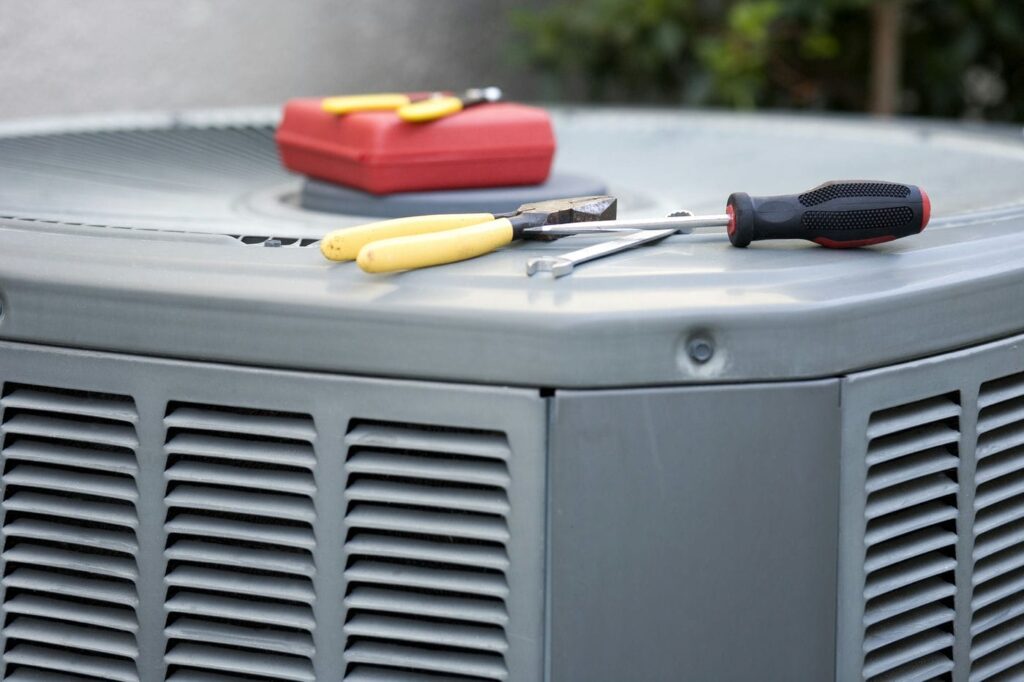
Some leaks move out of the “check the basics” category quickly. Once the problem returns after a restart, involves water near electrical components, or shows up alongside other symptoms, you are past the point where more guessing is likely to help. At that stage, the cheaper move is usually a proper diagnosis.
Repeated Overflow After A Restart Or Filter Change
If you change the filter, dry the area, restart the system, and the leak comes back quickly, assume the problem is deeper than basic maintenance. The drainage path may still be blocked, the pump may be failing, or the real trigger may be freezing rather than drainage alone.
Repeat behaviour matters. One puddle can still be ambiguous. The second or third round tells you the system has a consistent fault, not a one-time spill.
Water Near Electrical Components, Ceilings, Or Finished Flooring
Once the leak threatens electrical parts, finished surfaces, or ceiling materials below the unit, the problem is no longer just about comfort. It is now a property-damage issue. Even if the AC still cools, that does not make it safe or wise to keep running it.
The same goes for leaks that stain ceilings from an attic or upper-floor air handler, although this article is focused on the more common Toronto basement setup. Water has a way of making “small” problems expensive when it reaches the wrong material.
Leak Plus Warm Air, Short Cycling, Or A Silent Outdoor Unit
When water shows up with warm air, short cycling, or a dead-silent outdoor unit, you are looking at a symptom stack, not a single leak problem. That is the point where the diagnosis has to widen from drainage to the full cooling system, which is why a broader look at common air conditioner service repair issues often makes more sense than chasing the leak in isolation.
Repair Or Replace? How This Usually Plays Out
Most AC water leaks are repair problems first. A blocked drain line, failed condensate pump, rusted pan, or one-off airflow issue does not automatically push you into replacement. That matters, because too many homeowners hear “water leak” and assume the whole system is finished.
However, repeated leaks change the conversation. If the leak keeps coming back alongside poor cooling, ice, corrosion, or an older system that is already costing you time and money, the decision gets less about one repair and more about the pattern.
Repair Usually Makes Sense For Drain Lines, Pans, Pumps, And One-Off Airflow Faults
Repair is usually the sensible path when the problem is isolated and the rest of the system is still in decent shape. Drainage faults, a failed pump, or a clear airflow issue are all things that can often be fixed without turning the conversation into a full system replacement.
This is where honest diagnosis matters. You want to know whether the leak is the whole problem or just the symptom that finally made a larger issue visible.
Replacement Enters The Picture With Age, Rust, Coil Trouble, Or Repeat Leaks
Replacement becomes a reasonable conversation when the system is older, the leak is part of repeat summer trouble, or corrosion and coil-related issues are starting to stack up. In those cases, another repair may still be possible, but it may no longer be the smartest long-term use of your money.
If the diagnosis points that way, planning an air conditioner installation becomes a more sensible long-term move than another short-term patch.
How To Prevent Another AC Water Leak
Prevention is not flashy, but it works. Most water leaks do not begin as dramatic failures. They build from neglected filters, weak drainage, missed maintenance, or small faults that become obvious only once summer demand goes up.
Change Filters Before Airflow Problems Stack Up
A dirty filter is one of the easiest ways to start a chain reaction that ends with icing and water on the floor. Regular filter checks are simple, cheap, and far less disruptive than finding a puddle beside the furnace on a hot day.
The right schedule depends on the home. Pets, renovation dust, and heavy summer runtime usually mean you need to check more often, not just follow a fixed calendar because it sounds tidy.
Ask For Drain And Pump Checks During Spring Service
A useful maintenance visit should not stop at “it seems to be running.” The drainage side matters, especially on basement systems that rely on a condensate pump. Asking for the drain and pump to be checked is not overkill. It is basic prevention.
Deal With Small Leaks Before They Damage Finishes
Small repeat leaks are easy to delay because the first wipe-up feels manageable. The problem is that the damage adds up quietly. Rust spreads, staining gets worse, flooring absorbs moisture, and the system keeps running through the same fault.
Natural Resources Canada publishes a guide to maintaining a home heating and cooling system that covers filter timing, drainage checks, and seasonal service expectations.
Need Help Stopping The Leak And Finding The Real Cause?
An AC water leak often starts as a drain or airflow issue, but repeat leaks are also how bigger cooling problems first show up. Cozy World has served GTA homeowners since 1991, is an Authorized Lennox Dealer, and has offices in Toronto, Richmond Hill, and Burlington. When a leak is repairable, we focus on the actual cause and explain the next step plainly. Our air conditioner repair team diagnoses the drainage fault itself and brings the cooling back under control, rather than leaving you to chase puddles between service visits.
If the diagnosis shows the system is too far gone, we can help with that decision too. Cozy World is licensed to provide installation and service, and we give clear recommendations instead of pushing a replacement before the evidence is there.
Frequently Asked Questions
Yes, especially if you see active dripping, visible ice, or water near electrical parts. Shutting the cooling off helps limit more water damage and keeps a freeze-thaw problem from getting worse while you figure out the next step.
In many Toronto homes, the indoor AC coil sits above the furnace. That means an AC drainage problem often shows up as water around the furnace base, even though the furnace itself is not the source.
Yes. A dirty filter can restrict airflow enough to let the evaporator coil get too cold and freeze. When that ice melts, the homeowner sees water and often assumes the drain failed first.
It is one of the most common causes, but it is not the only one. Frozen coils, cracked pans, bad pump performance, and poor drain-line setup can all produce the same puddle on the floor.
It can contribute indirectly. Low refrigerant can be part of the conditions that let a coil freeze, and once that ice thaws, the system can leak water. The leak you see is still the result of water not draining properly, but the trigger may be bigger than drainage alone.
Water inside the drain system is normal because the AC removes humidity from indoor air. Water on the floor, outside the pan, or around the furnace cabinet is not normal and should be investigated.
Sometimes a homeowner can identify a visible blockage or obvious issue, but not every drain setup is simple, and not every leak starts with the line. If the system is iced, the layout is unclear, or water is near electrical parts, a service call is the safer move.
Ready to Get an HVAC Service Quote?
Whether you have questions, need assistance, or want to schedule a service, we're here to help. Don't hesitate to contact us anytime.
