
Why Is My House So Cold With A Heat Pump?
January 13, 2026 | Category: Heat pump, Maintenance, Replacement
If your house feels cold with a heat pump, the cause is usually one of five things: heat pump air feels cooler than furnace air, airflow or duct issues, backup heat not kicking in, outdoor unit icing or defrost problems, or a heating plan that can’t keep up in colder weather. This guide shows you what’s normal, what’s a real fault, and what you can check in 10 minutes before you book service. If your comfort issues started after a new heat pump installation, your fastest path is to confirm airflow, controls, and winter backup strategy.
Heat pumps heat differently than furnaces. They often run longer and deliver lower-temperature air at the vents. That can feel “cold” even when the system is working properly.
However, if the indoor temperature is dropping while the thermostat calls for heat, you likely have a real problem that needs diagnosis.
The Fast Answer: Heat Pump Air Often Feels Cooler Than Furnace Air
Most “my heat pump is blowing cold air” calls are really “my heat pump feels different than my old furnace.” A furnace produces hotter supply air. A heat pump usually delivers warmer-than-room-temperature air, but not furnace-hot.
Your job is to separate perception from performance. If the room temperature rises steadily, the system can be fine even if the vent air feels cool.
Why Heat Pump Supply Air Can Feel “Cool”
A furnace creates heat through combustion, so the air coming out of vents often feels very hot. A heat pump relocates heat, so the supply air temperature is typically lower, especially in winter.
Here’s the catch: lower supply air can still heat your home because the heat pump runs longer and maintains a steadier indoor temperature. You feel fewer “blast then off” swings.
If you judge performance by how hot the vent feels, you can miss what matters: whether the room temperature is actually climbing and holding.
How To Tell If It’s Normal Or A Real Heating Problem
Start with the simplest test. Set the thermostat to a steady temperature and leave it there for 30–60 minutes. Then watch whether the indoor temperature rises, holds, or drops.
If the temperature rises slowly and then stabilizes, the heat pump may be doing its job. If the temperature drops while the thermostat still calls for heat, treat it as a real issue, not a “heat pump is different” moment.
A fast reality check is to look for consistency: steady run time and a slow climb is normal. Short cycling, frequent stops, or falling room temperatures are not.
Government Reference For Heat Pump Basics
If you want a neutral explanation of how heat pumps work and why they can feel different than furnaces, Natural Resources Canada has a heat pump overview that’s worth reading. It helps set expectations for winter behaviour and long run times.
10-Minute Checklist Before You Call For Service
Before you book a service call, do a quick sweep of the basics. These checks fix a surprising number of cold-home complaints, especially in older GTA homes.
You’re not trying to repair the system yourself. You’re trying to rule out simple blockers so the next step is clear.
Check Thermostat Settings First
Confirm you’re actually in Heat mode, not Auto with a low setpoint or an outdated schedule. Check for “Hold” settings, deep night setbacks, or a schedule that never lets the house recover properly.
Also check for “Emergency Heat” or “Aux Heat” behaviour if your thermostat shows it. Some systems get stuck in the wrong mode after a reset, battery change, or settings change.
If you’re unsure, take a photo of the thermostat screen and write down the setpoint and indoor temperature. Those two numbers make troubleshooting faster.
Check Filter, Returns, And Supply Vents
Heat pumps need airflow. A clogged filter or blocked return can make the system feel weak, and it can trigger protections that reduce output.
Replace the filter if you can’t remember the last change. Make sure furniture, rugs, and curtains aren’t blocking return grilles. Open all supply vents, especially in rooms that feel cold.
If only one area is cold, don’t close vents in other rooms to “force air.” That often makes balancing worse and increases noise.
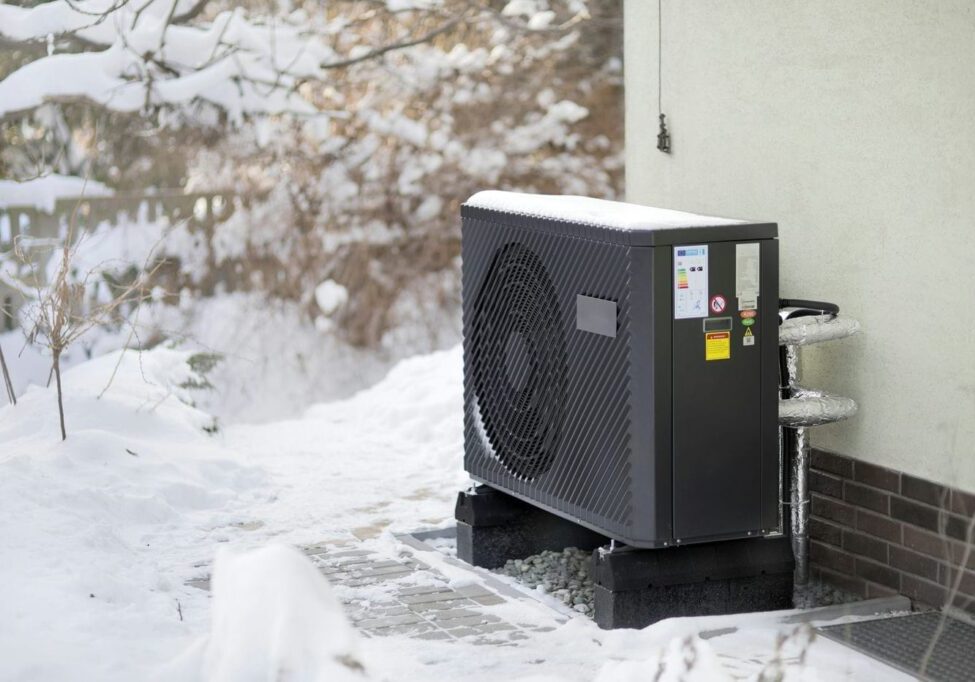
Check The Outdoor Unit For Snow, Ice, And Airflow Blockage
Your outdoor unit needs free airflow to pull heat from outside air. Snow drifts, leaves, and tight clearances can choke performance quickly during Ontario storms.
Clear snow away from the unit and make sure nothing blocks the coil. Look for thick ice that never clears, not just light frost that comes and goes.
Avoid chipping ice with tools or pouring hot water on a frozen coil. If you see repeated heavy icing, treat it as a placement, defrost, or airflow issue.
Check If Backup Or Auxiliary Heat Is Working
In colder GTA weather, backup heat often carries the load when heat pump capacity drops. If backup heat isn’t working or isn’t enabled, the house can fall behind fast.
Check whether the thermostat ever shows “Aux” or “Stage 2” when it’s very cold outside. If it never appears, or comfort keeps dropping in colder weather, your backup heat strategy may not be functioning.
You don’t need to guess what should happen. Your contractor should be able to explain when backup runs and why, based on your system type and settings.
When To Stop Troubleshooting And Call A Pro
Stop if you see breakers tripping, burning smells, loud grinding or squealing, or an outdoor fan that doesn’t run during a heat call. Those are not “settings” problems.
Also stop if the indoor temperature is dropping steadily while the system runs. That’s a performance failure that needs proper diagnosis, not more thermostat fiddling.
When you call your local HVAC contractor in Toronto, share what you checked. It saves time and reduces guesswork on site.
The Most Common Root Causes In GTA Homes

GTA homes have a few patterns that repeat. Multi-level layouts, basement equipment rooms, older duct systems, and winter weather expose weak airflow and control setups.
The right fix depends on which pattern you’re dealing with. So we’ll walk through the common root causes in plain language.
Uneven Rooms And Weak Airflow
If your upstairs is cold and your basement is warm, you likely have an airflow problem first. The heat pump can run perfectly and still fail to deliver comfort if the ducts can’t push air where you need it.
Look for clues like loud vents, weak returns, rooms that never match the thermostat, and comfort that changes room to room. These are distribution problems, not “capacity” problems.
If you want a quick way to judge whether your duct system can actually support a heat pump, use this guide as your duct reality check.
Normal Capacity Drop In Cold Weather
Heat pumps relocate heat from outside to inside. When it gets colder outside, there’s less heat available to pull in, and the heat pump’s capacity drops. That’s why winter performance is different than mild fall weather.
In Ontario, many setups rely on backup heat during colder stretches. That’s normal when it’s planned. It becomes a problem when it’s not planned, not enabled, or not working.
If you want to understand which cold-weather specs actually matter in Ontario, this is a helpful guide to read through.
Undersized System Or Mismatched Heating Plan
Sometimes the system simply can’t keep up during colder weather, especially if the home has higher heat loss or if the heat pump was sized without a clear winter strategy. You’ll feel it as “it runs, but it never catches up.”
That does not always mean the equipment is wrong. It can also mean the backup heat plan is wrong, the changeover settings are wrong, or airflow is limiting output.
If you want the Ontario sizing logic explained clearly, read this and compare it to what your contractor told you.
Outdoor Unit Icing, Snow, And Defrost Behaviour
Some frost and defrost cycles are normal. During defrost, the system may temporarily blow cooler air indoors because it’s shifting energy to clear the outdoor coil.
Thick ice that builds repeatedly and doesn’t clear is not normal. Snow drifts, tight clearances, poor placement, and airflow restrictions make icing worse and reduce heating capacity.
If you suspect placement or clearance is the issue, use this guide to check what “good” looks like in Toronto winter conditions.
Backup Heat Not Working Or Not Enabled
Backup heat exists for a reason. If it’s off, faulted, or misconfigured, your home can fall behind quickly in colder conditions. Homeowners often assume “the heat pump should handle it,” but the plan matters.
Common causes include disabled staging, thermostat configuration issues, wiring problems, or a fault in the backup heat source itself. You don’t need to diagnose the wiring, but you do need to confirm whether backup ever runs.
If your home gets cold only on the coldest days, backup heat is one of the first places to look.
Control Or Thermostat Setup Problems
Heat pumps depend on correct staging logic. A wrong thermostat type, wrong system settings, or aggressive setbacks can make a good system behave badly.
Deep temperature setbacks often hurt comfort because the heat pump has to “recover” quickly, which can trigger backup heat or cause long, inefficient runs. A steady setpoint often works better in winter.
If comfort improved after you changed thermostat settings, you likely had a controls problem, not a capacity problem.
Building Envelope Reality (Drafts And Insulation)
A heat pump can’t fix a drafty house. If you have major air leaks, poor attic insulation, or cold air pouring in from basement rim joists, the system will feel weak even if it’s running properly.
Quick signs include cold floors, consistent drafts near windows and doors, and one room that feels cold no matter what. These are heat loss problems, not equipment problems.
If you fix the envelope, you reduce the load. That improves comfort no matter what system you use.
When It’s Normal For A Heat Pump To Struggle And When It’s Not

A lot of frustration comes from mismatched expectations. Heat pumps heat in a steadier, lower-temperature way. That’s normal.
The line between normal and not-normal is the indoor temperature trend and system behaviour. Look for consistent patterns, not one-off moments.
Normal Winter Behaviours That Surprise Homeowners
Longer run times are common. Heat pumps often run steadily to maintain temperature instead of cycling on and off like a furnace. That can look “wrong” if you expect short bursts of hot air.
Supply air that feels warm-but-not-hot is also common. Heat pumps usually deliver lower supply temperatures than gas furnaces, especially when outdoor temperatures drop.
Defrost cycles can temporarily change indoor feel. You might notice cooler air for a short period, then normal heating resumes.
Clear Signs Something Is Wrong
If the indoor temperature drops while the system calls for heat, something is wrong. Don’t talk yourself out of that signal.
Repeated heavy icing that never clears is also a red flag. So are short cycling, frequent lockouts, or a system that never reaches setpoint in normal winter weather.
Other stop signs include breakers tripping, loud mechanical noises, burning smells, or error codes that keep returning. Those issues need proper diagnosis.
What To Tell Your HVAC Contractor So The Fix Is Faster
A good technician can’t fix what they can’t see. The fastest service visits happen when the homeowner gives clean, specific observations.
You don’t need technical language. You need details that narrow the cause.
Collect The Right Details Before You Call
Write down the indoor temperature, thermostat setpoint, and outdoor temperature when the problem happens. Note whether it’s a whole-house issue or only certain rooms, like the second floor.
Also note what the thermostat displays, such as Aux Heat, Stage 2, or any alerts. If the system behaves differently at night or after setbacks, write that down too.
These notes help your contractor test the right things first instead of guessing.
Photos And Notes That Save A Service Visit
Take a photo of the thermostat screen during the problem. Take a photo of the outdoor unit showing snow clearance or icing, if present.
Make a quick list of the coldest rooms and when they feel worst. “Upstairs bedrooms after 9 p.m.” is a useful clue. “The whole house feels cold only below -5°C” is another useful clue.
This information lets your contractor target airflow, controls, backup heat staging, or placement issues with fewer visits.
Get Your Heat Pump Heating Properly
Cold-house complaints usually come back to airflow, controls, backup heat, or winter capacity planning. When you fix the real limiter, comfort returns fast, and the system starts behaving predictably.
Cozy World has been in business since 1991. We’re an Authorized Lennox Dealer, our installers are factory trained, and we’re set up to diagnose the full system, not just swap parts. If you want clear answers and no HVAC cost surprises, the next smart step is to book a visit and make sure your system was set up to install a heat pump that actually fits your home and winter reality.
FAQs
Heat pump supply air often feels cooler than furnace air, especially in winter. If the room temperature rises steadily, the system can be operating normally even if the vent air doesn’t feel hot.
Track the indoor temperature trend for 30–60 minutes with a steady setpoint. If the indoor temperature drops while the thermostat calls for heat, treat it as a real performance issue.
This is often an airflow and duct balance issue. Weak returns, undersized ducts, or poor balancing can leave upper floors behind even when the equipment runs.
It can be normal during colder weather because capacity drops and the system runs longer to maintain comfort. If it never catches up or indoor temperature drops, look at backup heat, airflow, and controls.
Often during colder outdoor temperatures or when the heat pump can’t maintain setpoint on its own. The exact behaviour depends on your system type and how the controls were configured.
Check thermostat mode and schedule, replace the filter, confirm returns are not blocked, and clear snow or airflow blockages around the outdoor unit. Those four checks solve many “cold house” calls.
Yes, especially if it falls behind during colder weather even with good airflow and correct settings. Treat sizing as one possible cause and confirm it with a proper assessment rather than guessing bigger.
Ready to Get an HVAC Service Quote?
Whether you have questions, need assistance, or want to schedule a service, we're here to help. Don't hesitate to contact us anytime.
