
Is a High-Efficiency Furnace Worth It? AFUE Ratings Explained
September 28, 2026 | Category: Furnace

Yes, and in Canada you no longer get a choice about it. A gas furnace built for an ordinary house has to reach 95 percent AFUE, which makes high efficiency the floor rather than the upgrade. An AFUE rating is the share of the gas you pay for that ends up as heat inside the house, averaged across a whole heating season. Every unit on the quotes in front of you clears that bar already.
That leaves a narrower decision, and it is still a real one. Every quote you collect for a new furnace installation already carries a high-efficiency unit, whether or not the salesperson frames it that way. You are not choosing between efficient and cheap. You are choosing between the furnace that meets the floor and the one that beats it, and whether what comes bundled with the better unit earns the difference.
The Short Answer: High Efficiency Is the Floor in Canada, Not the Upgrade
The rule behind that is short, and it settles the old comparison outright. There is no cheaper 80 percent furnace waiting for you somewhere, because it cannot be built for your house. Anyone selling high efficiency as an upgrade in 2026 is selling you the baseline.
What the Law Requires on a New Gas Furnace
Federal efficiency regulations set a minimum for gas furnaces in the ordinary household size range, which covers effectively every unit going into a GTA detached, semi or townhouse. A gas furnace manufactured on or after 3 July 2019 has to achieve 95 percent AFUE or greater.
Two details in that rule do real work. The trigger is the date the furnace was made, not the date it was sold or installed, so old stock is not a loophole. And the requirement reads 95 percent or greater, so it is a floor manufacturers are free to beat rather than a target they all land on. The number itself comes out of a standard laboratory test method, so one brand’s label means the same thing as another’s.
When a Quote Shows Less Than 95 Percent
A handful of narrow product classes sit lower, and knowing them lets you tell a legitimate 90 percent quote from a bad one. Through-the-wall units and space-constrained furnaces with integrated cooling sit at 90 percent or greater. Larger furnaces above the household size band and three-phase units sit lower again, as do replacement non-condensing furnaces for manufactured homes and units for relocatable buildings.
None of those is a menu option for a typical GTA home. They exist because a particular building or installation cannot take a condensing appliance. So if a quote for a normal detached, semi or townhouse comes in under 95 percent, ask which class the unit falls into and expect a specific answer.
What an AFUE Rating Actually Measures
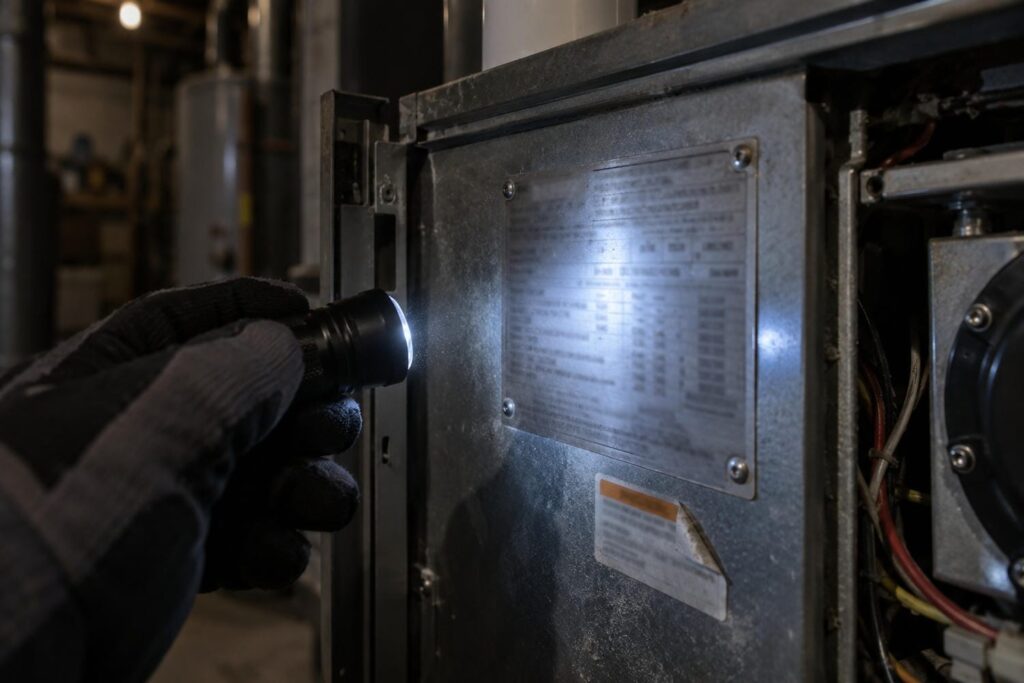
One number, one job. An AFUE rating describes the appliance, not the system it sits in, and the boundary around what it measures is where most of the confusion lives. Knowing where that boundary falls stops you chasing a point that was never going to pay you back.
A Seasonal Fuel Number, Not a Comfort Rating
The percentage is a percentage of the gas energy you pay for. Natural Resources Canada, which defines the rating for the Canadian market, calls it a seasonal measure of fuel efficiency only, and states that it does not include the electrical energy needed to run controls, fans or pumps. Seasonal is the word doing the work: the figure is averaged across a whole heating season, mild days and start-up losses included, rather than measured at full output on the coldest night.
The range you will actually see on a quote is narrow. Gas and propane furnaces currently sold run 90 to 98 percent. Oil furnaces run 78 to 96. Inside that gas band, the part available to you for an ordinary GTA house starts at 95.
Why the Numbers Jump Into the Nineties
Burning gas makes water vapour, and that vapour carries a large share of the heat. An older furnace pushed it up the chimney hot and still gaseous, and the heat went with it. That constraint capped the old units in the seventies and eighties, and the later generation at around 90 percent.
A condensing furnace does the opposite. It cools the exhaust deliberately, far enough that the vapour turns back into liquid water inside the appliance and gives its heat to your house instead of the sky. That one design decision is why the numbers sit in the mid and high nineties.
Two consequences follow. The water is mildly acidic, so the furnace drains it away rather than let it stand. And the exhaust is now too cool and too wet for the old metal chimney, so it leaves through plastic pipe instead.
What the Number Leaves Out
Three things sit outside the measurement, and each can cost you more than the last AFUE point.
- Electricity sits outside it. The blower and the inducer fan run on hydro, and the rating is a fuel-only measure, so none of it shows up on the label.
- Your ducts sit outside it. The rating is measured at the furnace, so whatever the duct runs lose on the way to the rooms sits on top of it. How much that costs depends on your own runs, which is why they are worth a look while the furnace is out.
- Sizing sits outside it too. An oversized furnace short-cycles, and the rating never sees it, so the right furnace size for your house decides more of the outcome than the last point of efficiency.
The Real Decision: From 95 Percent to 96, 97 or 98
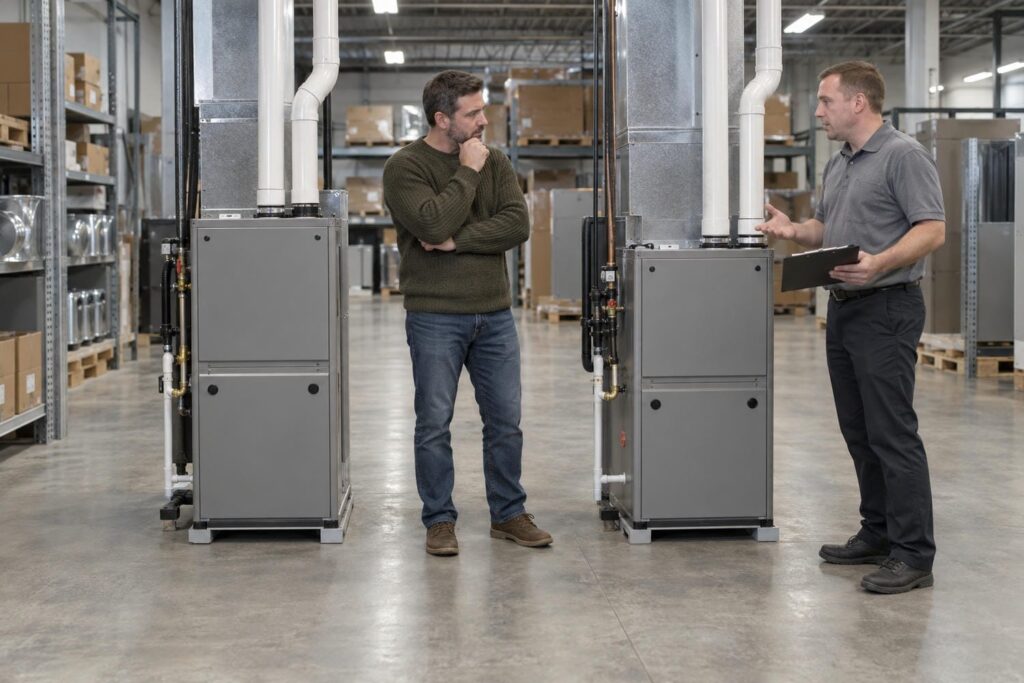
The gap between the unit that meets the floor and the best one on the market is three points. That is a real saving and a modest one at the same time. The only way to size it is against your own house, and the numbers that do it are closer to hand than most people expect.
What We Tell Most Homeowners at the 95 Versus 98 Decision
For most GTA homes our advice is straightforward. Buy the unit that meets the floor, from an installer who will size it properly and do the venting and the drain right, and put the difference into the quality of the install.
Three points of AFUE is about three percent less gas for the same heat. That is the whole prize on the fuel side, before anything else about the house is considered.
Four things change that answer, and only one of them is about fuel. Buy up when the house burns a lot of gas, because a small percentage of a big number is still money. Buy up when you are staying long enough to see it come back, when you want the variable-speed blower for the comfort and the quieter running rather than for the payback, or when the better unit carries a materially better warranty.
If a quote justifies the premium unit purely on the AFUE points, it is selling you the smallest part of the difference. The price gap deserves a better explanation than that.
The Two Numbers Only Your Own Bill Can Give You
You already have the percentage. Turning it into dollars takes two more numbers, and both of them are on your own gas bill.
The first is your annual consumption in cubic metres, off twelve months of bills or the usage history in your Enbridge account. The second is your delivered cost per cubic metre, printed on the bill, and it is the only gas price that is genuinely yours. One sets how much gas the saving applies to. The other sets what that gas costs you.
A provincial average will not stand in for either. The gap between a 1960s bungalow and a new build is larger than the gap between two furnaces, so an average tells you nothing about your house. One caution on the second number: Enbridge adjusts the supply portion of its rates in January, April, July and October, so today’s figure is a snapshot.
Part of Your Gas Bill Does Not Move With Usage
Your gas bill is not one number. It is built from a customer charge, a delivery charge, the gas supply charge, and transportation and storage, a structure the Ontario Energy Board sets rather than your utility.
That matters for the arithmetic. Cutting your gas use by three percent does not cut the total bill by three percent, because the customer charge does not move with your usage at all. So run the comparison against the usage-linked part of the bill rather than against the bottom line.
Why a Payback Number You Read Online Is Probably Stale
The federal carbon charge came off Ontario gas bills on 1 April 2025. That took a charge off every cubic metre you burn, which pushes the payback on a more efficient furnace further out rather than pulling it in. Any payback calculation written before that date works from a cost that is no longer on the bill, and it flatters the upgrade.
The rest of the bill moves on its own schedule too, and not all at the same pace. The supply charge is reset every three months, while the delivery charge is adjusted once a year. So a payback figure worked out two winters ago has been overtaken several times, and the only current version of this arithmetic is the one you run off your own bill.
What Usually Comes Bundled With the Higher Numbers
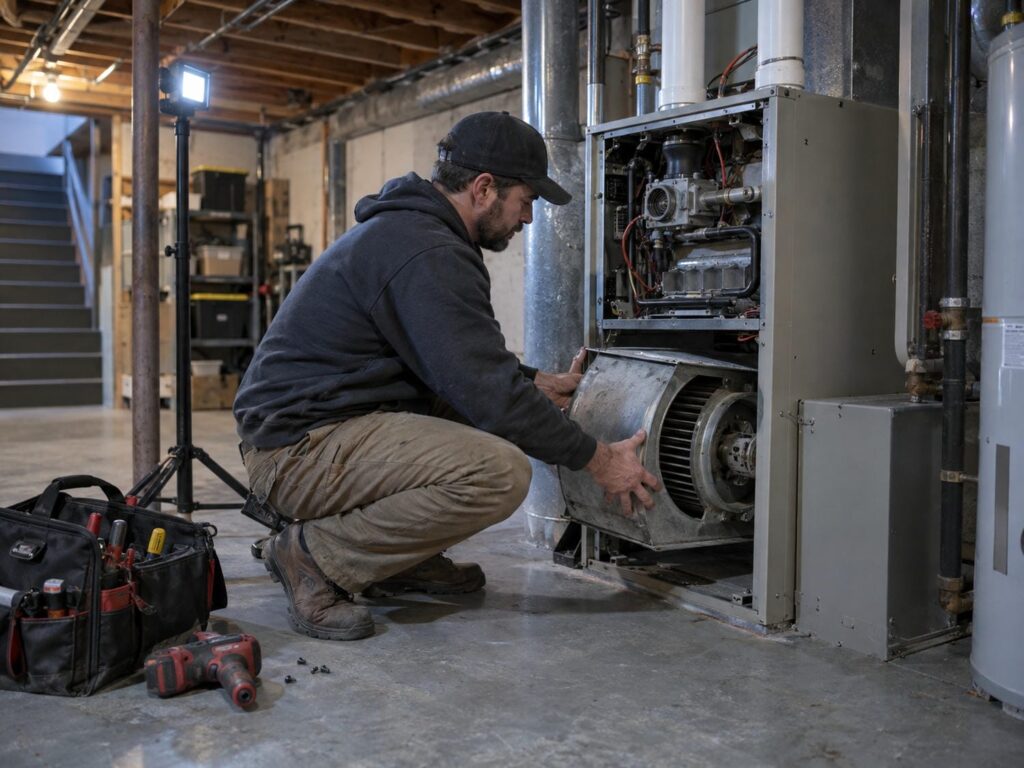
The honest reason a 98 percent unit costs more is rarely the three points between it and the floor. It is the hardware that travels with those points, and the blower is the piece you will actually notice.
The Blower Is the Part You Feel on the Hydro Bill
The better units use a blower motor that varies its speed instead of running flat out or not at all. The difference between the two motor types is large: the variable-speed type holds its efficiency near 80 percent even when running slowly, while the older type works at 60 to 65 percent.
None of that appears in the AFUE number, which is why two furnaces with the same rating are not the same machine. The blower runs on electricity, so it is the part of a high-efficiency furnace you feel on the hydro bill rather than on the gas bill.
There is a comfort side too. A furnace that fires less often lets the house temperature swing further between cycles, and high-efficiency units are less affected.
Here Is the Catch: A Better Blower Can Nudge Gas Use Up
Here is the catch, and it rarely makes it into a sales conversation. A variable-speed motor puts less waste heat into the air stream than the older type does, so the furnace has to make slightly more of that heat itself. The electricity saving is real. Part of it comes back on the gas side.
This is not a hunch. Researchers at a federal test facility in Ottawa ran the comparison in two identical houses in 2002 and found exactly that: a clear drop in electricity use across the heating season with a corresponding rise in gas use, and lower electricity use again in summer. Two houses is a small experiment, so take the direction and not a dollar figure.
When You Are Comparing a New Furnace Against Keeping the Old One
You may not be choosing between two new furnaces at all. You may be deciding whether to replace anything, which is a different question with different inputs. Whether to repair or replace an aging furnace turns on condition, age and repair history rather than on the number on a sticker.
Once you have decided to buy, a furnace replacement puts the efficiency question back in front of you, and the first move is finding out where your current unit sits.
Date Your Furnace Against the Floor That Applied When It Was Made
You can place your own furnace on the regulatory ladder in about ten seconds. The rating plate inside the door carries the manufacture date, and the minimum in force on that date tells you which generation of equipment you own.
Two qualifiers travel with it. The date that matters is when the furnace was made, not when it was installed, so a unit that went in during 2010 may well have been built under the older rule. And a floor is a minimum rather than a specification, so an individual furnace can be rated higher than the row it sits in.
The floor has moved twice since 2009, and each step changed what that generation of furnace does for you.
| When Your Furnace Was Made | Minimum AFUE Allowed Then | What That Tells You Now |
| Before 31 December 2009 | 78% or greater | A non-condensing unit, venting into a chimney. Anything you buy today is a large step up, and the basement work that comes with it is real. |
| From 31 December 2009 | 90% or greater | The mid-efficiency generation. Closer than people expect to a new unit on fuel alone, so the case for replacing rests on age, condition and repair history. |
| On or after 3 July 2019 | 95% or greater | Already at today’s floor. If this furnace is healthy, a new one buys you a few points and better hardware, not a transformation. |
Comparing Against the Old Nameplate Flatters the Old Furnace
The number stamped on a 25-year-old unit describes it as it left the factory. It does not describe what is happening in your basement now. A fouled heat exchanger, a gas valve drifting out of adjustment, tired bearings and a blower pulling through a loaded filter all drag real performance below the plate.
So a comparison against that old number is a comparison against the old furnace as it used to be, not as it is. The real gap is usually wider than the two labels suggest.
There is a fair exception. A unit that has had an annual furnace tune-up every year holds its number far better than one left alone, and that visit is how you find out what you are working with.
Where Ontario’s Rebate Money Is Actually Pointed
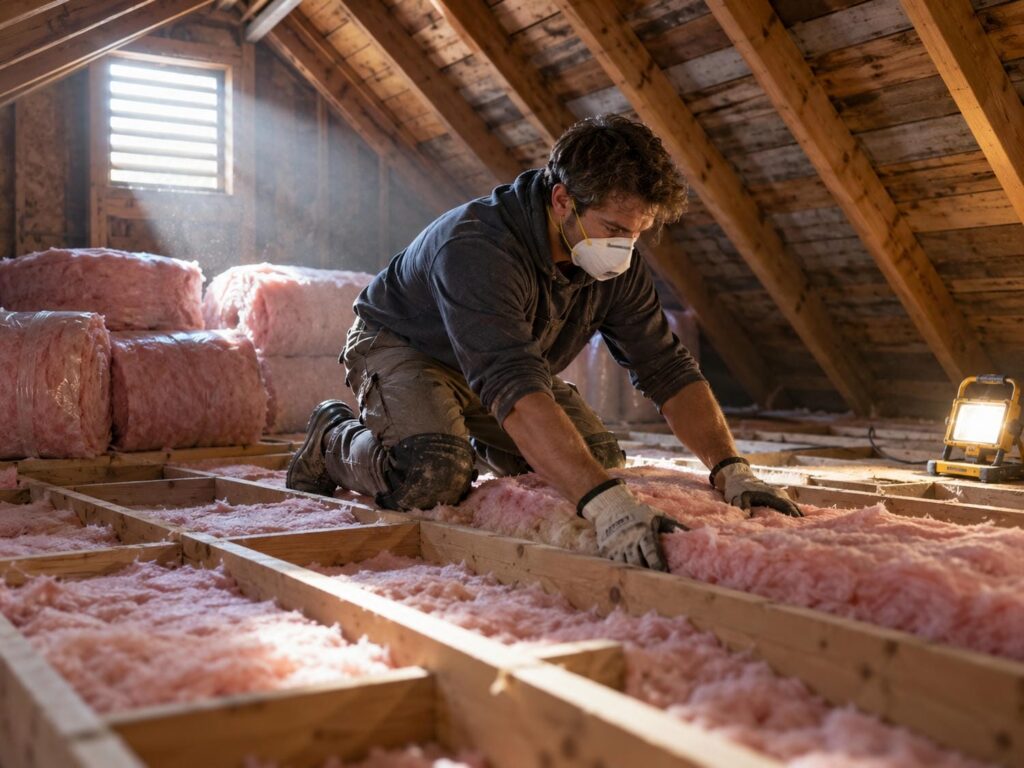
The fair question is whether a rebate closes the price gap between 95 and 98. It does not, and the reason is worth knowing, because the money is pointed at things that move the same gas bill.
Neither the Ontario Program Nor the Federal Grant Pays for the Furnace Itself
The open Ontario program is the Home Renovation Savings Program, delivered by Save on Energy with Enbridge Gas. A natural gas furnace or boiler replacement appears on neither of its upgrade lists, with or without a home energy assessment. Being heated by gas is part of how a house qualifies for the program, but the heating system itself is not a rebated measure.
The federal route is closed. The Canada Greener Homes Grant stopped accepting documents at the end of 2025, and while it ran it listed furnaces as ineligible anyway, outside northern and off-grid communities. Enbridge’s earlier Home Efficiency Rebate ended intake in January 2025.
Those are the three programs to check before you sign, and none of them moves the AFUE decision.
What the Program Does Cover, and Why It Matters to the Same Bill
The program splits its upgrades into two routes, and which route you are on decides whether you need a home energy assessment first.
The assessment route covers attic insulation, foundation insulation, exposed floor insulation and exterior wall insulation, along with air sealing, windows and doors, and heat pump water heaters. It asks for at least two qualifying upgrades, and it puts money toward the assessment itself.
The other route needs no assessment at all. It covers cold climate air source heat pumps, ground source heat pumps, solar panels and battery storage, smart thermostats, and some appliances.
The pattern is hard to miss. The money is pointed at the building envelope and at other equipment, and the AFUE points between 95 and 98 are on neither list. Amounts are set by the program and they change, so check the current figure on the program’s own page.
How to Read the Quotes in Front of You

Three checks turn the whole question into something you can do at the kitchen table with the quotes side by side. None needs a technician, and all three change what you sign.
Compare the EnerGuide Numbers, Not the Badges
Every new gas furnace sold for a GTA house already meets the 95 percent floor, so the badge on the brochure is not what separates two quotes. Compare the AFUE figures on the EnerGuide labels instead, and ask each contractor to put the exact AFUE of the exact model in writing, not a range and not a series name. A series covers several units at several ratings, which is how two quotes that look identical turn out not to be.
Certification badges describe the blower and other features as much as the burner, so two badged units can differ in the number you are actually comparing. Ask for the label on each of the gas furnaces you are quoted.
“High Efficiency” Is the Baseline, So Watch How It Is Sold
If a quote presents high efficiency as the upgrade line, it is describing the legal minimum as a feature. That is not necessarily dishonest. But it tells you how the conversation is being framed, and it is worth pausing on what the extra money actually buys.
So ask it out loud. What does the more expensive unit do that the cheaper one does not, beyond the AFUE points? A fair answer usually comes back to the blower and to the warranty, and both are reasonable things to pay for. An answer that stays on the efficiency number is not an answer.
Check the Contractor Is Registered to Touch Gas in Ontario
Gas work in Ontario is done by contractors registered with the province’s technical safety authority. That registration is not a formality. A registered contractor carries the responsibility for making sure the technicians it sends to your house are trained and certified for the work they are doing.
So ask for the registration before the quote is signed, and ask whether the technician who will attend is certified for this job. Both questions take a minute. A contractor who works this way will have the answers ready.
There Is Another Path, and It Is Rated on a Different Scale
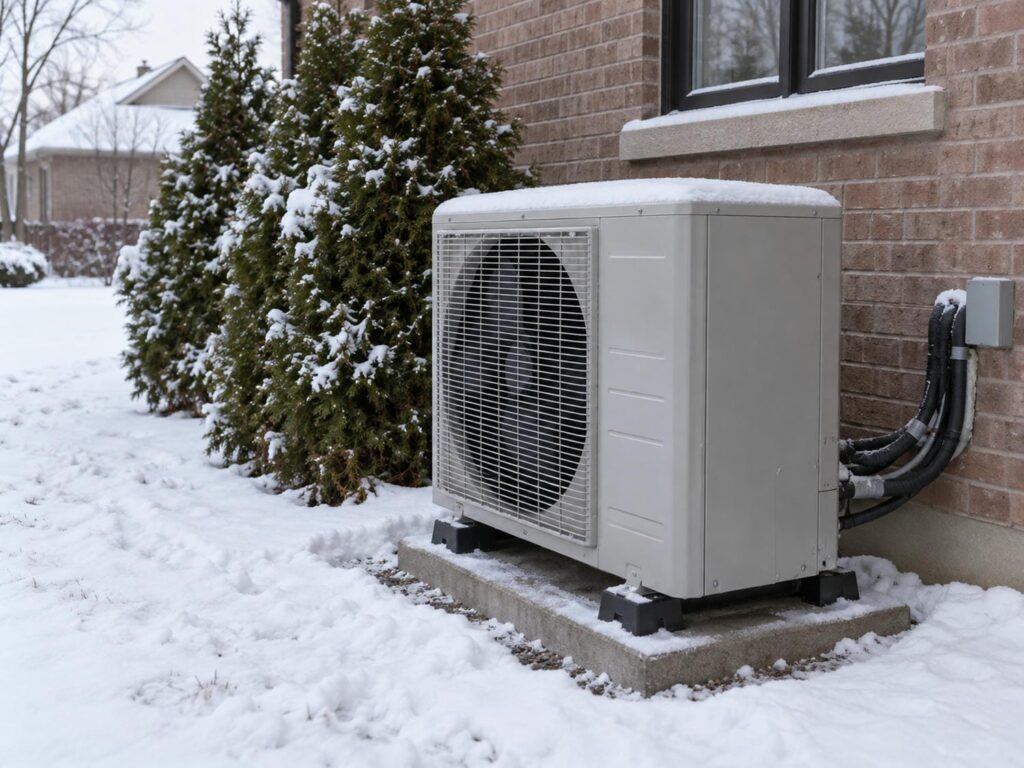
A heat pump can heat the same house. In a hybrid setup it works alongside a gas furnace, with one running at a time rather than both, which is why some GTA homeowners price both routes at once.
The thing to settle before you compare them is that heat pumps are not rated in AFUE. They are measured on a different set of scales entirely, so the percentage on a furnace quote and the numbers on a heat pump quote cannot be lined up against each other. That comparison needs a different set of numbers.
Get the Numbers Checked Against Your Own House
The AFUE difference between two quotes is small enough that the things around it decide the outcome. The size of the unit, the state of the ducts, where the condensate drains and how the exhaust leaves all move the result further than the last few points on the label. None of that can be settled over the phone.
Cozy World has been putting furnaces into GTA basements since 1991. We are a TSSA registered heating contractor, gas licensed to do furnace installation, and there are no cost surprises on our quotes: the new system cost is exactly as quoted. On a high-efficiency furnace install we say plainly when the premium unit is not the one we would buy for your house.
If you have quotes in hand and want the numbers checked against your own house, book a furnace consultation with our team.
Frequently Asked Questions
No, not for an ordinary home. A gas furnace in the household size range, manufactured on or after 3 July 2019, has to reach 95 percent AFUE or greater, and the trigger is the manufacture date, not the sale date. A few narrow product classes sit lower, including through-the-wall units with integrated cooling and replacement non-condensing units for manufactured homes, but none is a choice a typical GTA homeowner gets to make.
For most homes, no, not for the fuel saving on its own. The money usually does more good in the sizing and the quality of the install than in the last three points on the label. Buy up when your house burns a lot of gas, when you are staying long enough to see the difference come back, or when you want the variable-speed blower for the comfort rather than the payback.
No. A gas bill is built from a customer charge, a delivery charge, the supply charge, and transportation and storage, and the fixed part does not move when your usage falls. So a few percent less gas produces less than a few percent off the total. Run the comparison against the usage-linked part of your bill and the number you get will be honest.
No. It is a fuel-only measure, averaged across a heating season, and it leaves out the electricity that runs the controls, the fans and the pumps. That is why a better blower shows up on the hydro bill rather than on the gas bill, and why two furnaces carrying the same AFUE rating can cost different amounts to run.
Open the front panel of the cabinet and look at the rating plate. It carries the model number, the serial number and the manufacture date, and the EnerGuide label carries the AFUE itself. If the label is long gone, the manufacture date still places the unit against the minimum that applied when it was built.
Longer than most people expect, because the saving is a few percent of only the part of your bill that moves with usage. If a move is likely in the next few years, the better use of the money is getting the size and the install right. That work stays with the house rather than the owner, and it holds its value whoever lives there.
Ready to Get an HVAC Service Quote?
Whether you have questions, need assistance, or want to schedule a service, we're here to help. Don't hesitate to contact us anytime.
